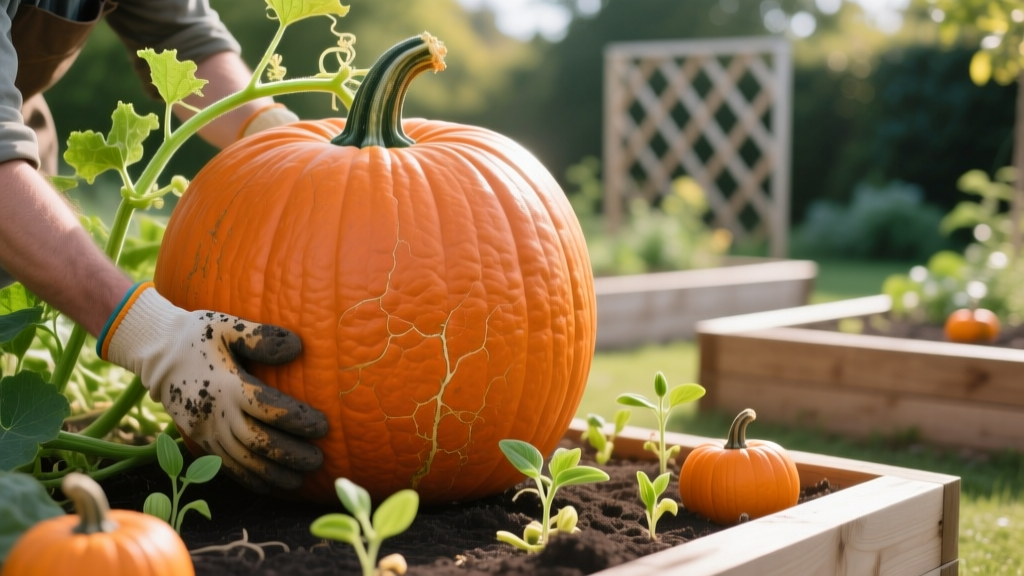
The Secret to Growing Giant Pumpkins at Home
Most “giant pumpkin failures” aren’t caused by bad seeds—they’re caused by letting the plant grow too many pumpkins. It feels wrong to cut off healthy fruit, but a vine that’s trying to mature 6 pumpkins will almost always give you 6 average pumpkins, not one monster. The backyard trick is ruthless focus: build a huge, healthy plant first, then funnel that entire engine into a single fruit.
That’s the real secret: giant pumpkins are more like a livestock project than a normal vegetable crop. You’re managing inputs (soil, water, nutrients), training growth (vine direction, pruning), and then “finishing” one fruit with precision timing.
Start With Genetics and Timing (Before You Touch the Soil)
Pick genetics that actually scale (and don’t get fooled by the packet photo)
If you want a 100–300 lb backyard beast, choose Dill’s Atlantic Giant or a proven giant line, not a carving type. Standard jack-o’-lantern varieties are bred for shape and handle strength, not for maximum weight gain. Real-world example: two neighbors can have identical care, but the one planting Atlantic Giant often sees fruit sizes 2–4× larger than a carving cultivar.
Back-calculate your season: you need about 110–130 warm days
Most giant types want roughly 110–130 days from transplant to mature fruit, and they hate cold soil. Count backward from your first fall frost, then plan to transplant when nights reliably stay above 55°F. If your season is short, start seeds indoors 3–4 weeks early so the plant hits the ground running.
Warm the soil like you mean it (cheap hack: clear plastic)
Cold soil stalls roots, and stalled roots mean slow vines and small fruit. Lay clear plastic over the bed 10–14 days before planting to pre-warm the top 6–8 inches. DIY alternative: use old storm-window panels or a mini hoop tunnel; both can bump soil temps by several degrees for almost free.
Build a Soil “Battery” That Can Feed One Massive Fruit
Go bigger than you think: a 10' x 10' bed is a solid starter footprint
Giant pumpkins aren’t a container crop in disguise—they’re a land project. Aim for at least 100 square feet per plant (a 10' x 10' bed), with vines trained outward. Scenario: if you only have a 6' x 6' raised bed, you can still try giants, but plan on aggressive pruning and expect more like 50–150 lb instead of 300+.
Hit the soil pH sweet spot: 6.3–6.8 (and don’t guess)
Giant pumpkins are heavy feeders, and nutrient uptake drops when pH is off. Use a lab soil test (often $15–$25 through a local extension service) and target pH 6.3–6.8. If your pH is low, lime takes time—apply in fall or at least several weeks before planting.
Compost is the cheapest “yield insurance”—but measure it
Instead of sprinkling a thin layer and hoping, apply compost at a real rate: 2–3 inches over the bed and mix into the top 8–12 inches. That’s a lot of organic matter, but it pays back in water-holding and steady nutrient release. Cost example: buying bagged compost can run $4–$6 per 1–2 cu ft bag; a bulk delivery (often $35–$60 per cubic yard) is usually far cheaper per volume if you have space for a pile.
Pre-charge the bed with a balanced base fertilizer (then adjust)
Use your soil test as the boss, but a common approach is a balanced granular fertilizer worked in before planting, then later shifting to more potassium during fruit fill. Extension guidance generally emphasizes soil testing and proper nutrient balance for cucurbits; see University of Minnesota Extension’s pumpkin-growing recommendations (2020) for soil prep and management principles. If you’re DIY-minded, you can build fertility with compost plus a measured blend like blood meal (N), bone meal (P), and sulfate of potash (K)—but keep it consistent and track what you apply.
“Irrigation management is one of the most important cultural practices in vegetable production because it directly affects yield and quality.” — Penn State Extension, Drip Irrigation for Vegetable Production (2018)
Planting and Early Growth: Create a Vining Machine
Start seeds in 4" pots and transplant carefully to avoid stalling
Giant pumpkin seedlings hate root disturbance, so start in 4-inch pots (or soil blocks) and transplant before they get root-bound—usually around 3 weeks. Plant on a slight mound for drainage, and protect with a low tunnel or cloche for the first 7–10 days if nights are cool. Case example: one grower who always “held seedlings a week longer” often saw a 10–14 day stall after transplant; moving them earlier fixed it.
Give the main vine a direction on day one (so you’re not wrestling later)
As soon as the main vine is 2–3 feet long, gently guide it in a straight line, because it gets brittle fast. Put a marker stake at the crown and another at 10 feet so you can keep the vine aligned. Real-world example: when vines grow in circles, pruning becomes messy and you’ll end up stepping on secondary vines—an easy way to lose weeks of growth.
Use a wind break if your yard is exposed (cheap: snow fence)
Wind batters leaves, snaps petioles, and dries soil faster than you think. A simple snow fence or row of stakes with burlap on the windward side can make a noticeable difference for under $30–$60. Scenario: if you’re on a hill or open corner lot, wind protection can be the difference between a thriving canopy and a plant that looks perpetually stressed.
Water Like a Pro (Not Like a Sprinkler Habit)
Install drip irrigation and keep leaves dry to cut disease pressure
Overhead watering is the fast track to mildew, especially in humid summers. A basic 1/2-inch mainline with 1/4-inch drip lines costs roughly $25–$60 for a single plant setup, and it pays off in fewer leaf diseases and steadier growth. Penn State Extension (2018) highlights drip irrigation as a key tool for efficient watering and reduced foliar disease risk.
Water to a depth target: aim for moisture 6–8" down, not a surface splash
Instead of “watering daily,” check moisture depth with a trowel: soil should be damp 6–8 inches down near the root zone. Deep watering encourages deeper roots and fewer stress swings that can slow fruit gain. DIY tip: if you can squeeze a handful from 6 inches down into a loose ball that crumbles when tapped, you’re in a good zone.
Mulch after the soil warms—straw is great, but keep it off the crown
Once the bed is warm, apply 2–4 inches of straw or shredded leaves to reduce evaporation and mud splash. Keep mulch pulled back 6 inches from the crown to prevent rot and discourage stem pests. Cost note: one straw bale often covers about 40–60 sq ft at a few inches deep, usually cheaper than bagged mulches.
Feeding Schedule: Push Growth, Then Switch Gears for Fruit Fill
Early season: feed for vine and leaf mass, but don’t overdose nitrogen
In the first half of growth, you want a powerful canopy, but too much nitrogen can delay fruiting and make tissues tender. If you’re using a soluble fertilizer, a cautious starting point is 1 tablespoon per gallon every 7–10 days, then adjust based on leaf color and growth rate. Real-world example: dark, overly lush leaves with few female flowers often means you’re pushing N too hard—back off and let the plant shift.
At fruit set: move to a higher-potassium routine (the “weight gain” phase)
Once you’ve chosen your keeper pumpkin (more on that below), shift feed toward potassium to support fruit fill. Many giant growers use a “bloom” style fertilizer; just follow label rates and avoid stacking too many products at once. A practical hack: keep a simple notebook with dates and doses so you don’t accidentally double-feed during busy weeks.
Use foliar feeding as a small booster, not your main meal
Foliar sprays can help when roots are stressed, but they won’t replace solid soil fertility. If you spray, do it early morning and keep the concentration mild (follow label; more isn’t better). Case example: after a heat wave, a light kelp foliar helped perk growth within a few days—but the real rebound came from consistent soil moisture and root-zone feeding.
Pruning and Training: The Part Most People Skip (and That’s Why Their Pumpkins Stay Small)
Commit to one pumpkin per plant (two if you have serious space)
If you want giant size, pick one primary fruit and remove the rest. Keep one backup for a week or two in case your main fruit aborts, then cull it. Scenario: a family garden that kept three pumpkins “for the kids” got three 40–60 lb fruits; the next year they chose one and jumped to a single 180 lb pumpkin using the same bed.
Choose the right fruit position: 10–15 feet out on the main vine
The best keeper is often set on the main vine around 10–15 feet from the crown, where the vine is strong and the plant has momentum. Earlier sets can work, but they may limit overall plant size; later sets can run out of season. Example: if your vine is only 6 feet long and already set a pumpkin, remove it and let the plant build more engine first.
Prune secondaries to a repeatable pattern (so you can actually manage the jungle)
A clean approach: let secondary vines grow, but prune them after 8–10 feet so the plant doesn’t turn into a thousand-tentacle mess. Then prune tertiaries (third-level vines) as they appear, especially near the crown. The goal is a canopy you can walk around without stepping on vines—and a plant that puts energy into fruit instead of endless exploration.
Bury vine nodes to create extra rooting (free boost, big payoff)
Every time a vine node touches soil, it can form roots—so help it. Dust nodes with compost and cover with 1–2 inches of soil as the vine grows (avoid burying the vine itself too deeply). Real-world example: growers who root nodes along the main and secondaries often see steadier growth during heat because the plant has multiple “drinking straws” in the bed.
Pollination and Fruit Care: Protect the One You Kept
Hand-pollinate in the morning for a higher keep rate
Pollination is most successful early, typically before 9 a.m., when flowers are fresh. Pick a male flower, peel back petals, and gently rub pollen onto the female flower stigma; then loosely tape the female shut for the day to prevent stray pollen. Case example: in a neighborhood with few bees, hand-pollination turned repeated baby-fruit drop into consistent fruit set within a week.
Turn the pumpkin early so the stem doesn’t crack later
As the fruit grows, the stem can get stressed and split if the pumpkin “locks” into a bad angle. When the fruit is still small (think volleyball size), gently nudge it a little each day to align it so the stem comes off at roughly a 90° angle from the vine. Go slow—stem damage is one of the quickest ways to lose a big fruit.
Put the pumpkin on a “bed” to prevent rot (DIY options work)
Once it’s growing, keep the underside dry with a barrier: a piece of rigid foam, old carpet, sand, or a wood pallet section. Avoid trapping moisture; you want drainage and airflow. Cost-saving tip: rigid foam insulation scraps are often free from construction leftovers, and they work great for keeping the belly dry.
Disease and Pest Moves That Save You Weeks (Not Just Leaves)
Powdery mildew: start prevention before you see it
By the time powdery mildew is obvious, you’re already losing photosynthesis. Improve airflow through pruning and avoid wetting leaves; if you use a labeled fungicide, start when conditions favor disease (warm days, cool nights, humidity). University of California Agriculture and Natural Resources notes powdery mildew is a common cucurbit issue and emphasizes timely management (UC ANR IPM, 2021).
Squash vine borer: protect the crown and look for the “sawdust” sign
If SVB is common in your area, wrap the lower stem with fabric or foil, or mound soil over the vine nodes to encourage new roots that can keep the plant going even if the crown is hit. Check daily for frass (it looks like wet sawdust) near the base, especially in early summer. Real-world example: a gardener who lost plants every year stopped the cycle by using row cover until flowering and then focusing on node rooting as backup insurance.
Slugs and pill bugs under mulch: bait the edges, not the whole patch
Mulch is great, but it can create a hangout for pests that chew young fruit and stems. Place iron phosphate bait around the outer edge of the patch rather than broadcasting everywhere—cheaper and more targeted. DIY alternative: set boards near the patch and check in the morning; you can remove slugs hiding underneath.
Shortcuts, Hacks, and “Is It Worth Paying For?” Comparisons
Drip irrigation vs. soaker hose vs. overhead sprinkler
| Method | Approx. cost (1 plant) | Best for | Main downside |
|---|---|---|---|
| Drip line + timer | $35–$90 | Steady moisture, dry leaves, fewer disease headaches | Setup time; needs occasional checks for clogs |
| Soaker hose | $15–$35 | Quick install, decent watering for the money | Uneven output as hose ages; can encourage shallow watering |
| Overhead sprinkler | $10–$30 | Cooling during extreme heat (occasional use) | Wets leaves; higher mildew risk; water waste |
DIY soil test strategy: lab test once, cheap meter for spot checks
A lab test gives you the real nutrient picture for $15–$25, and it’s worth it at least once every couple of years. A cheap moisture meter won’t replace lab data, but it can help you avoid the #1 mistake—thinking the soil is wet because the surface is wet. The money-saving move is using the lab test to avoid buying the wrong fertilizer “just in case.”
Three Real-World Growing Scenarios (and How to Win Each One)
Scenario 1: Small suburban yard, one plant, limited compost
Put your single plant in the sunniest spot and commit to one fruit. Buy 1 cubic yard of bulk compost (often cheaper than bags) and build a 10' x 10' amended patch, then use straw mulch to stretch water and reduce stress. Keep pruning tight and train vines along the lawn edge so you can still mow without crushing growth.
Scenario 2: Short season (cool nights, early frost)
Start seeds indoors 3–4 weeks early, pre-warm soil with clear plastic, and use low tunnels for the first month. Choose the keeper fruit a bit earlier (closer to 10 feet out) so it has time to pack on weight. If frost threatens, a big fabric cover over the plant for one or two nights can buy you critical extra days of growth.
Scenario 3: Hot climate with intense sun and occasional heat spikes
Your battle is heat stress and water swings. Use drip irrigation plus thick mulch, and consider temporary shade cloth (30%) during extreme stretches so leaves keep working instead of shutting down. Keep the pumpkin itself shaded—an old bedsheet draped like a tiny tent can prevent sunscald for basically free.
Last-Minute “Finishing” Moves When the Pumpkin Is Taking Off
Measure growth so you know what’s working (and don’t rely on vibes)
Once your keeper is set, measure the circumference with a soft tape every 3–4 days. If growth stalls, the usual culprits are inconsistent moisture, root stress, or disease creeping in. Seeing the numbers keeps you honest—and it helps you catch problems while you can still fix them.
Don’t over-handle the vine near the fruit after it’s basketball-sized
As the pumpkin gains weight, the vine and stem become less forgiving. Limit foot traffic, avoid sudden vine repositioning, and keep pets/kids from stepping in the patch. One cracked stem can turn a record pumpkin into compost in a week.
Know when to stop pushing: late-season nitrogen can backfire
Late blasts of nitrogen can trigger fresh, tender growth that’s mildew-prone and doesn’t help the pumpkin much. As nights cool, keep feeding steady but not aggressive, and focus on plant health and moisture consistency. If the vine is still dark green and active, you’re already in a good place—don’t “improve” it to death.
If you do the unglamorous parts—big bed, warm soil, drip water, hard pruning, and one chosen fruit—you’ll be shocked how fast a pumpkin can gain weight. The cool part is that none of this requires a fancy greenhouse or mystery products. It’s mostly discipline, a few well-timed moves, and the willingness to snip off perfectly good pumpkins so one can become the giant everyone stops to photograph.
Sources: Penn State Extension (2018), Drip Irrigation for Vegetable Production. University of Minnesota Extension (2020), pumpkin growing and care guidance. University of California Agriculture and Natural Resources, IPM (2021), cucurbit powdery mildew management principles.