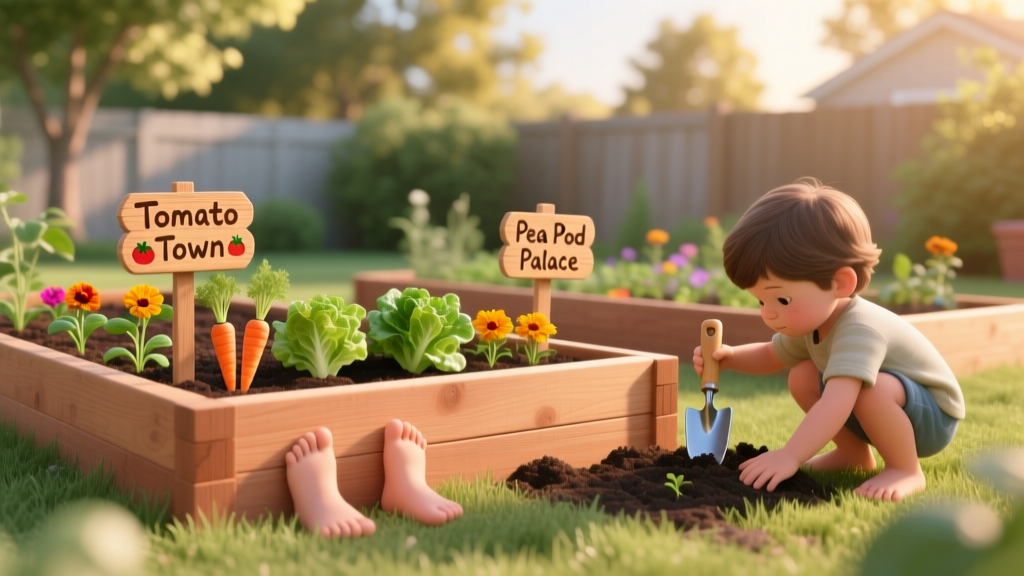
Backyard Children's Garden Project Ideas
The tricycle is parked sideways on the patio, a soccer ball has claimed the only sunny patch, and the “garden bed” you imagined is currently a mud kitchen with a stick whisk. If you’ve ever tried to create a children’s garden in a real backyard—shared, messy, and in constant motion—you know the challenge isn’t getting kids outside. It’s designing a space that invites play and still functions like a garden.
Think like a landscape designer for a moment: we’re not building a showpiece. We’re creating a small outdoor world with clear edges, resilient plants, and projects that make kids feel ownership. The best children’s gardens aren’t precious—they’re durable, sensory, and designed for short attention spans and long summer evenings.
Design principles that make a kids’ garden work (and last)
1) Start with “zones,” not a single bed
A children’s garden succeeds when each area has a job. For most yards, three zones is the sweet spot:
- Grow zone: edible plants and easy flowers.
- Make zone: mud kitchen, potting bench, water play, or art wall.
- Move zone: a loop path, stepping stones, stump “obstacle course,” or a small open patch for tumbling.
Even in a small space, zoning reduces conflict: kids can dig where digging is allowed, and you can keep the “grow zone” productive.
2) Use child-scale dimensions
Adult-sized garden beds are hard for children to reach and hard for adults to defend. Aim for these practical dimensions:
- Raised bed width: 3 ft (0.9 m) max so a child can reach the center from one side.
- Bed height: 10–12 in for easy building; 18 in if you want seating edges.
- Path width: 24–30 in for kids to pass with a watering can; 36 in if you want stroller access.
If you only take one design lesson: make edges obvious. A crisp border—brick, lumber, or even a thick mulch line—tells kids where feet go and where plants live.
3) Prioritize sunlight like a pro
Most kid-friendly edibles need 6–8 hours of direct sun. If your yard has less, don’t fight it—pivot to shade-tolerant sensory plants, leafy greens, and container herbs. Track sun for one day (or use a phone compass app) and label three categories:
- Full sun: 6+ hours (tomatoes, strawberries, zinnias).
- Part sun: 3–6 hours (lettuce, snap peas, mint in pots).
- Shade: under 3 hours (ferns, hosta, mossy play corners).
4) Choose forgiving materials (and design for spills)
Kids water sideways. They drag hoses. They forget gates. So design a garden that expects it:
- Mulch paths (wood chips or pine fines) for soft landings and easy reshaping.
- Drip irrigation in the grow zone, plus a small watering can station for “helping.”
- A wash zone near a spigot: a $12–$25 plastic tub becomes a tool rinse bin.
“Nature-based play spaces should balance ‘loose parts’ (things children can move and manipulate) with stable elements that anchor the space.” — Robin C. Moore, landscape architect and researcher, Natural Learning (2014)
Layout strategies you can copy this weekend
The “Loop Path” layout (best for high-energy kids)
A loop path turns a backyard into a mini park and reduces trampling because movement has a clear route. Here’s a reliable footprint that fits many suburban yards:
- Overall area: 12 ft x 16 ft (192 sq ft)
- Path: 30 in wide loop in mulch
- Inside the loop: one 3 ft x 8 ft raised bed + one “dig pit”
Place the raised bed where it gets the most sun. Put the dig pit (sand/soil mix) on the shadier side so it doesn’t bake.
The “Kitchen Garden + Mud Kitchen” split (best for toddlers to early elementary)
This is the highest-return design for small families: half productive, half play. You can do it in a narrow side yard or along a fence line.
- Grow strip: two 2 ft x 6 ft beds with a 24 in path between
- Make strip: a 4 ft long mud kitchen counter (repurposed pallet or old table)
Keep the mud kitchen within hose reach. A simple rule: if it takes more than 10 steps to get water, kids will abandon it or use your planted beds as “water storage.”
The “Container City” layout (best for renters)
If you can’t dig or build, you can still design a child-centered garden. Group containers in a cluster to create a “room,” and use a small rug or mulch mat to define it.
- Containers: 6–10 pots (3–10 gallons), plus one large 15–20 gallon pot for a “wow plant”
- Spacing: 12–18 in between pots so kids can water without knocking leaves off
For safety and stability, avoid tall narrow pots in windy areas. Wide nursery containers are cheap and hard to tip.
Three real-world scenarios (and what to build)
Scenario 1: Small sunny patio (renter, 8 ft x 10 ft)
You’ve got sun, but no soil access. Use “Container City” and add one vertical element.
Plan: 8 containers + a trellis panel zip-tied to a railing.
- 2 x 10-gallon pots: cherry tomatoes
- 2 x 7-gallon pots: strawberries
- 2 x 5-gallon pots: dwarf sunflowers or zinnias
- 2 x 3-gallon pots: herbs (mint in its own pot; basil in another)
Estimated cost: $85–$220 depending on pots (DIY: free buckets with drainage holes). Add a $20 bag of potting mix and a $12 kids’ watering can. Total can stay under $150 if you reuse containers.
Scenario 2: Suburban backyard with lawn (homeowner, 20 ft x 30 ft open area)
This is where the loop path shines. Convert a corner to reduce mowing and increase year-round use.
Plan: a 12 ft x 16 ft loop garden + stepping stones to the gate.
- One 3 ft x 8 ft raised bed for family crops
- One 3 ft x 5 ft “pizza garden” (oregano, basil, cherry tomatoes)
- One 4 ft diameter dig circle edged in logs
Estimated cost: $250–$650. Biggest variables are lumber and soil. A DIY alternative is to skip the raised bed and build a 4 in tall edged in-ground bed with cardboard sheet mulch and compost.
Scenario 3: Shady yard with tree roots (mixed sun, 3–4 hours)
Fighting tree roots is miserable. Instead, design with containers, a shady sensory border, and one edible that tolerates part sun.
Plan: a 6 ft x 12 ft “shade room” with a small stump circle for seating.
- 3–4 large containers (15–20 gallon) for greens and herbs
- Shade sensory plants (ferns, heuchera, hosta) along the edge
- Loose parts: pinecones, smooth stones, sticks in a crate for building
Estimated cost: $120–$400. DIY alternative: ask a local tree service for free stump rounds for seats.
Project ideas kids actually use (with layout notes)
1) A “pizza garden” bed (3 ft x 5 ft)
Give kids a theme and they’ll remember to check it. A pizza bed is compact, productive, and fun to harvest.
Planting plan (spacing):
- 1 cherry tomato (1 plant in a cage, 18–24 in from edges)
- 2 basil plants (10–12 in apart)
- 1 oregano (12 in from neighbors; consider a pot sunk into soil to contain)
- Optional: scallions in a row (2 in apart)
2) A sunflower “hideout” (6 ft x 6 ft)
Create a living fort by planting tall sunflowers in a U-shape and leaving an opening as a doorway.
- Variety: ‘Mammoth’ (dramatic height) or ‘Sunzilla’ for wow factor
- Spacing: 12–18 in apart
- Sun: 6+ hours
Underplant with low nasturtiums to create a “carpet” and attract pollinators.
3) A sensory path (10–15 ft long)
A sensory path slows kids down in a good way. Use 3–5 textures in repeating segments:
- Flat stepping stones
- Mulch
- Smooth river rocks in a bordered strip
- A cedar plank balance beam (2x6 board)
Keep rock sections narrow (8–12 in wide) so stones don’t migrate into the lawn.
4) A pollinator corner (4 ft x 8 ft)
Place this near the grow zone to boost fruit set and make the garden feel alive.
- Sun: ideally 6 hours
- Rule of thumb: 3 flower species minimum, staggered bloom times
Plant selection that’s tough, exciting, and easy to grow
Plants for kids should earn their space: fast results, texture, scent, or snacks. And they must tolerate imperfect watering.
Edibles kids love (and why they work)
- Cherry tomato ‘Sun Gold’: sweet enough to eat off the vine; vigorous and productive. Cage early.
- Sugar snap pea ‘Sugar Ann’: quick spring crop; kids can pick and eat immediately. Provide a 4–6 ft trellis.
- Strawberry ‘Albion’ (everbearing): repeated harvest through the season in many climates; great in containers.
- Carrot ‘Little Finger’: shorter roots for containers and kid-sized pulling; thin seedlings to 2 in spacing.
- Lettuce ‘Black Seeded Simpson’: fast from seed; tolerant of part sun; harvest as “cut-and-come-again.”
Flowers with drama and resilience
- Zinnia ‘Benary’s Giant’: sturdy stems for kid bouquets; long bloom window in sun.
- Nasturtium ‘Alaska’: edible leaves and flowers; trails nicely from bed edges; tolerates leaner soil.
- Sunflower ‘Mammoth’: structure + seed heads for birds; great for “measurement” games.
- Marigold ‘Gem’ series: compact, fragrant, and cheerful; easy from seed.
Sensory plants (touch/smell) that behave
- Lamb’s ear (Stachys byzantina): soft leaves kids can’t resist; use as an edge plant in sun/part sun.
- Lavender ‘Hidcote’: scent + pollinators; drought-tolerant once established; needs well-drained soil.
- Mint (spearmint): only in pots (it spreads); perfect for “garden tea” games.
Safety note: Skip plants with toxic berries or look-alike edible confusion in kids’ zones. If you want a hedge, choose non-toxic options like dwarf blueberries (if soil is acidic enough) rather than ornamental berries.
A practical comparison: beds vs. pots vs. in-ground
| Option | Best for | Typical upfront cost | Watering frequency (summer) | Kid-friendly factor |
|---|---|---|---|---|
| Raised bed (3 ft x 8 ft) | Homeowners, long-term gardens | $180–$450 (wood + soil) | 2–4x/week (less with drip) | Clear boundaries; easy to reach |
| In-ground bed (edged, sheet-mulched) | Budget builds, larger spaces | $30–$120 (compost + edging) | 1–3x/week (soil dependent) | Great learning, but edges must be obvious |
| Containers (3–20 gallon) | Renters, patios, tree-root yards | $50–$250 (pots + mix) | 3–7x/week (small pots dry fast) | Movable, flexible, excellent for “ownership” |
Step-by-step setup: build a kids’ garden in a weekend
Option A: A simple loop path + one raised bed
- Mark your footprint: use a hose or string to outline a 12 ft x 16 ft area. Walk it with your child and adjust until it feels fun.
- Define the path: mark a 30 in wide loop. Remove grass in the path (flat shovel) and lay cardboard (overlap edges by 6 in).
- Add mulch: spread 3–4 in of wood chips over cardboard. Budget: $35–$60 if delivered locally; often cheaper in bulk.
- Place the bed: set a 3 ft x 8 ft bed in the sunniest spot. Level it with a rake.
- Fill with soil: use a raised bed mix. Expect roughly 18–20 cubic feet for a 3x8 bed at 12 in tall. (Check your bed height.)
- Plant “fast wins” first: lettuce, radishes, and nasturtiums from seed; tomatoes from starts.
- Create a tool station: a bucket for kid tools, a hook for a hose, and a small bin for harvest.
Option B: A renter-friendly container garden cluster
- Pick the sun pocket: find the spot with 6+ hours if possible.
- Arrange empty pots first: place tallest pots in back, smallest in front; leave 12–18 in gaps.
- Add saucers only where needed: use them on decks; skip on gravel to avoid mosquitoes.
- Plant one “anchor” crop: a cherry tomato in a 15–20 gallon pot creates instant structure.
- Label everything: simple popsicle-stick labels reduce “helpful weeding.”
Budget-smart choices and DIY swaps
Children’s gardens can be built beautifully without boutique materials. Here are swaps I use in real client projects:
- Instead of cedar beds: use untreated Douglas fir for a lower-cost bed and plan for a shorter lifespan; or build in-ground beds with crisp edging.
- Instead of expensive pavers: use wood rounds (from a tree service) or salvaged bricks for stepping stones.
- Instead of a store-bought mud kitchen: repurpose an old bench + a metal bowl as a “sink.” Total DIY cost can stay under $40.
- Instead of drip irrigation kits: use soaker hoses pinned under mulch; upgrade later.
Also consider ongoing costs: seeds are inexpensive, but soil and mulch add up. If you’re watching the budget, invest first in soil quality—it reduces failures and keeps kids interested.
Maintenance expectations (so it doesn’t become a chore)
A well-designed children’s garden should run on light, regular touch-ups rather than big rescues. Plan on 30–60 minutes per week for an average 200 sq ft kid-garden area, plus a seasonal reset.
Weekly rhythm (growing season)
- Water: 2–4 sessions/week for beds; containers may need water most days in heat.
- Harvest: 10 minutes of “snack picking” prevents overripe mess.
- Weed: 10–15 minutes—invite kids to find “the weeds with flowers” vs. “the weeds with thorns.”
Seasonal tasks
- Spring: refresh mulch to 3 in; plant peas/lettuce early; set up trellises before vines sprawl.
- Summer: deadhead zinnias and marigolds; check tomatoes for support; keep a shallow water dish for pollinators (refresh often).
- Fall: plant garlic or cover crops if you want a science lesson; collect sunflower heads for bird feeding.
- Winter: store kid tools; sketch next season’s “wish list” with your child—design buy-in is everything.
Designing for learning: small choices that create big engagement
Kids stay interested when the garden gives quick feedback. Mix fast crops (radish, lettuce) with long crops (tomatoes, sunflowers). Add one measuring feature: a sunflower height chart on the fence or a “bean pole” with marked inches.
If you want a research-backed nudge to prioritize nature time, the American Academy of Pediatrics has emphasized the value of play in natural environments for children’s health and development (AAP, 2018). And if your goal is to support pollinators while you build beauty, the Xerces Society’s guidance on creating pollinator habitat highlights the importance of diverse flowering plants across seasons (Xerces Society, 2020).
The most practical trick I know is also the simplest: plant something your child can pick today. A pot of mint, a patch of strawberries, or a row of snap peas transforms the garden from a “don’t touch” space into a place that welcomes hands.
Once the edges are clear, the paths are forgiving, and the plants are chosen for resilience, the backyard stops feeling like a battlefield between play and planting. It becomes a shared project—one where muddy footprints and half-picked bouquets are signs the design is working.
Sources: American Academy of Pediatrics (2018). Xerces Society for Invertebrate Conservation (2020). Robin C. Moore (2014), Natural Learning.