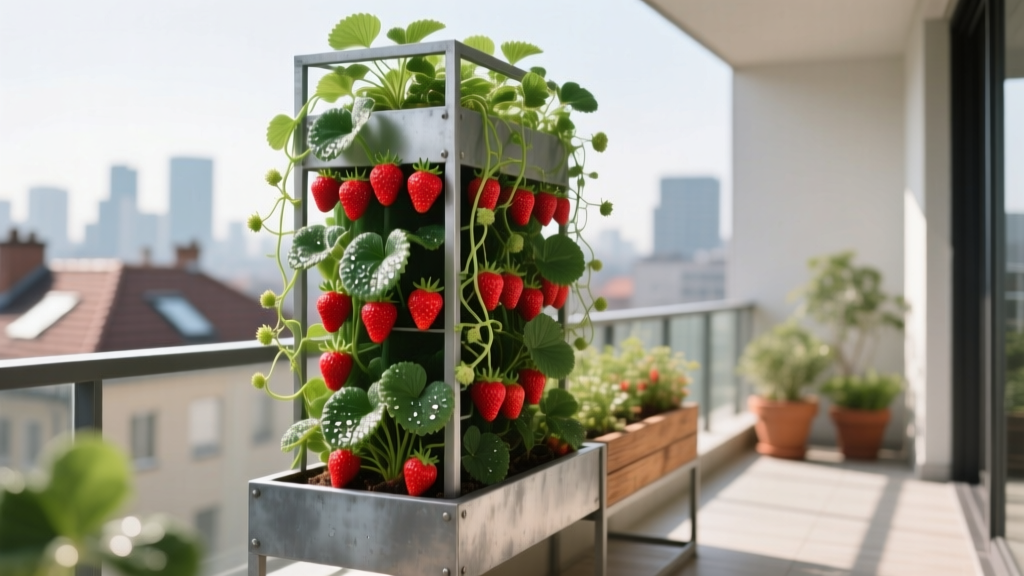
Balcony Strawberry Tower Garden
The first warm Saturday of spring always starts the same way: you step onto your balcony with coffee, glance at the sad rectangle of empty floor, and imagine a bowl of strawberries that didn’t come from a clamshell. Then reality taps the railing—there’s barely room for a chair, your neighbor’s balcony shades yours by mid-afternoon, and the wind off the street turns every lightweight pot into a sail. That’s exactly why a strawberry tower garden works so well here: it turns “not enough space” into a vertical, edible feature you can design like a living sculpture.
In this project, I’m going to walk you through a balcony strawberry tower the way I’d lay out a small landscape installation: we’ll read the site, choose a tower footprint, plan light and access, then pick strawberry varieties that actually perform in containers. You’ll end up with a layout that fits your balcony, meets sunlight realities, and yields a steady handful of fruit for months.
Start with the site: light, wind, weight, and water
Before buying anything, take ten minutes to measure and observe. Strawberries are generous plants, but they’re not mind-readers—they need enough sun, consistent moisture, and a potting mix that drains well. Most balcony failures come from ignoring one of those three.
Sunlight targets (and what to do if you don’t hit them)
Aim for 6–8 hours of direct sun for best flowering and fruiting. If you only get 4–5 hours, you can still grow strawberries—just expect fewer berries and lean into everbearing/day-neutral varieties that keep trying even in marginal light.
University of Minnesota Extension notes that strawberries “require full sun for maximum yield and quality,” reinforcing that light is the main driver of performance (University of Minnesota Extension, 2020).
Wind and balcony microclimate
Balconies are wind tunnels. Wind dries towers fast and can snap flower stems. If your balcony is exposed, plan to:
- Place the tower within 12–18 inches of a wall for a calmer pocket (but still allow airflow).
- Add a simple windbreak: a 2 x 4 ft lattice panel zip-tied to the railing works well and looks intentional.
- Choose a heavier base or add ballast (more on that in the build).
Weight and water: the unglamorous constraints
A fully watered tower is heavy. Water weighs about 8.3 lb per gallon. A tall tower can easily hold 5–10 gallons of water within the mix and reservoir after watering—plus wet soil mass and the container itself. If you rent or have a compact balcony, keep your footprint modest and manage runoff. Use a saucer or shallow tray so you’re not watering your downstairs neighbor’s patio furniture.
For water quality and food safety, the U.S. FDA recommends washing fresh produce under running water before eating (FDA, 2022). In a balcony garden, that’s a good habit—especially if your plants collect urban dust.
Design principles that make a tower feel “designed,” not improvised
A strawberry tower can look like a plastic gadget—or it can look like a deliberate vertical garden. The difference is layout: proportion, circulation space, and a simple visual plan.
Pick a footprint that respects how you move
On a balcony, circulation is everything. Keep 24 inches of clear walking space wherever you step through daily (door to chair, chair to grill, etc.). Your tower should tuck into a corner or align with a railing post so it reads as part of the architecture.
Good starting dimensions:
- Footprint: 14–18 inches diameter (compact towers)
- Height: 36–60 inches (tall enough to matter, not so tall it tips)
- Planting pockets: 12–28 pockets depending on style
Work with vertical “zones”
I design tower plantings in zones just like a border: top, middle, and bottom. Even though strawberries are the star, the zones help with irrigation and aesthetics.
- Top zone: dries fastest; plant the most drought-tolerant strawberry variety here or add a moisture-holding amendment.
- Middle zone: the workhorse; most productive pockets.
- Bottom zone: stays moist; great for vigorous plants or a few trailing companions (like alpine strawberries) if space allows.
Design for harvest access
Strawberries hide. If you can’t see berries, you won’t pick them at peak sweetness. Keep the tower where you can rotate it or reach around it. If your tower is against a wall, choose a model that’s easy to turn, or use a rolling plant caddy rated for 150 lb so you can spin it for even light and easy picking.
Tower options: choose the structure that matches your balcony
Your tower choice is a design choice: it affects the look, the maintenance rhythm, and the budget. Here’s a practical comparison of three common approaches.
| Tower style | Typical size | Plant capacity | Best for | Approx. cost (USD) |
|---|---|---|---|---|
| Stackable planter tower (plastic/ceramic tiers) | 16" dia x 36–48" tall | 12–24 plants | Renters, neat look, easy setup | $60–$180 |
| DIY PVC pocket tower (perforated pipe in a base) | 6–8" pipe, 48–60" tall | 16–28 plants | DIYers, maximum vertical yield | $35–$90 |
| Strawberry “pot tower” (terracotta pots stacked) | 18–22" base, 36–54" tall | 10–18 plants | Classic style, heavier/stable | $70–$220 |
“Vertical planting succeeds when irrigation is treated as part of the design, not an afterthought—water distribution and access determine long-term plant health.” — paraphrased design takeaway from green wall performance research emphasizing irrigation consistency (Manso & Castro-Gomes, 2015)
Note: The quote above reflects a common finding in vertical greening studies: irrigation design is the make-or-break factor. For balcony towers, that translates into choosing a tower you can water evenly without guessing.
Layout strategies: where the tower goes on three common balcony types
Let’s make this real. Here are three scenarios I see constantly, with layouts that behave well over time.
Scenario 1: The narrow rental balcony (3 ft x 10 ft)
Goal: Keep a clear path and avoid drilling or permanent fixtures.
Layout: Place a 16-inch diameter stackable tower in the far corner, tight to the railing post, with a 20-inch saucer beneath. Add a rolling plant caddy so you can rotate for sun and roll back for cleaning.
Why it works: The tower occupies about 1.4 sq ft of floor area, leaving room for a chair and a slim bistro table. Rotation prevents one-sided growth if your sun angle is limited.
Scenario 2: The windy high-rise corner (6 ft x 8 ft, strong gusts)
Goal: Prevent tipping and keep irrigation consistent in drying winds.
Layout: Use a heavier terracotta pot stack tower or a plastic tower with a weighted base. Add 10–15 lb of gravel in the bottom reservoir area (sealed in a bag if needed) and position the tower 12 inches from the wall to reduce wind exposure.
Why it works: The added weight and sheltered placement reduce sway. Pair with a drip line from a small reservoir (even a 5-gallon bucket with a simple valve) if you travel or work long hours.
Scenario 3: The part-sun balcony (4 hours direct sun, bright shade otherwise)
Goal: Grow a steady trickle of berries, not a one-time glut.
Layout: Choose a 36–48 inch tower and keep it at the sunniest edge of the balcony. Use day-neutral strawberries and limit total plants to avoid competition—think 12–16 plants instead of 24, giving each pocket room.
Why it works: In lower sun, fewer plants per tower often outperforms cramming pockets, because each plant gets more light and airflow.
Plant selection: strawberry varieties that shine in towers
In towers, you want varieties that fruit reliably in containers, tolerate fluctuating moisture, and don’t produce a jungle of runners that drain energy. Here are designer-approved picks with the practical “why.” Availability varies by region, so treat these as a short list to ask for at local nurseries.
Day-neutral: consistent harvest, great for balconies
- ‘Albion’: Large, sweet berries; strong container performance; reliable over a long season. Great if you want fewer, better berries.
- ‘Seascape’: Productive and forgiving; good flavor even when conditions aren’t perfect. A smart choice for first-time tower growers.
Everbearing: two main flushes, strong flavor
- ‘Ozark Beauty’: Popular everbearing with good flavor; works well if you can give consistent water and feed.
- ‘Quinault’: Softer berries but very productive; ideal if your tower is right outside the door so you pick daily.
Alpine strawberries: small fruits, big charm
- ‘Mignonette’ (Fragaria vesca)
- ‘Alexandria’ (Fragaria vesca)
Alpines are perfect for the lower pockets where they can trail slightly. The berries are smaller, but the fragrance is unbeatable—this is the variety you’ll eat warm while you water.
How many plants per tower (and spacing that actually works)
For most towers, plan 1 plant per pocket. If you’re building your own with cut openings, make pockets about 4 inches wide and space them 6–8 inches apart vertically in a staggered pattern. Strawberries need airflow; cramped towers invite mildew and reduce berry size.
Materials, soil, and budget: build a tower that doesn’t dry out by Tuesday
Budget depends on whether you buy a tower or DIY one. Here’s a realistic breakdown you can plan around.
Budget ranges
- Lean DIY: $50–$90 (PVC pipe, base pot, basic mix, seedlings)
- Mid-range: $120–$250 (purchased tower, quality potting mix, drip kit)
- Design-forward: $250–$450 (ceramic/terracotta tower, plant caddy, organic fertilizers, extra companions)
Soil mix that holds moisture but drains cleanly
A tower is essentially a tall column of potting mix—water wants to rush down and exit the bottom. Counter that with a blend that retains moisture without becoming soggy:
- 70% quality potting mix
- 20% coconut coir (moisture retention)
- 10% perlite (air space and drainage)
Plan on 2–4 cubic feet of mix depending on tower size. Strawberries prefer slightly acidic conditions (roughly pH 5.5–6.5), and many commercial potting mixes land close enough for container growing.
DIY alternative: a simple PVC tower (clean-looking and renter-friendly)
If you like a modern look and want maximum vertical planting, a PVC pocket tower works surprisingly well when done neatly. Use food-safe or potable-water-rated pipe if you can find it.
Step-by-step setup (tower + planting) that stays stable and productive
Set aside an hour for assembly and planting, plus a little patience for the first two weeks while roots settle in.
- Measure your placement zone. Mark a circle on the balcony floor with tape: 18 inches diameter is a good planning size for most towers.
- Add a saucer or tray. Choose a tray at least 2 inches larger than the tower base to catch runoff.
- Stabilize the base. If your tower is lightweight, add ballast: 10 lb of gravel in the bottom cavity or in a sealed bag placed under the lowest tier.
- Pre-moisten your soil mix. Slightly damp mix fills evenly; dry mix creates voids and later sinkholes.
- Fill in stages. Add soil to the first tier, plant pockets, then add the next tier. This prevents roots from being yanked upward as soil settles.
- Plant at the right depth. Keep the strawberry crown (where leaves emerge) right at soil level—burying it invites rot, and planting too high dries roots.
- Water slowly. First watering should take 3–5 minutes, pausing to let water soak in. You’re aiming for even moisture top to bottom.
- Mulch pockets lightly. Use clean straw or fine bark to reduce splash and slow drying—especially on the top tier.
- Pinch early flowers (optional but effective). For new transplants, pinch blossoms for the first 10–14 days so plants root strongly before fruiting.
Feeding, watering, and maintenance expectations (what your calendar needs to allow)
A tower is not a “water once a week” container. It’s more like a petite raised bed standing on end: it dries from the top, drains from the bottom, and rewards consistency.
Weekly time commitment
- Watering: 10–20 minutes per week in mild weather; up to 5 minutes per day during hot spells
- Pruning/pinching runners: 5 minutes per week
- Feeding: 5 minutes every 2–3 weeks
Total typical maintenance: 20–40 minutes per week, more during peak summer heat.
Watering rhythm that prevents bitter berries
Strawberries turn seedy or small when stressed. In a tower, aim for “evenly moist, never swampy.” A simple test: stick a finger 2 inches into the top pocket. If it’s dry at that depth, water.
In heat waves, add a second watering focused on the top third of the tower. That’s where stress starts.
Fertilizer approach (keep it gentle)
Use a balanced liquid fertilizer at half strength every 2–3 weeks during active growth, or a controlled-release organic fertilizer mixed into the top layer at planting time. Overfeeding creates lush leaves and fewer berries, especially in containers.
Seasonal tasks
- Spring: Refresh top 2 inches of mix, check drainage, start feeding once growth resumes.
- Summer: Remove runners weekly (unless you want a few starts), harvest often, and watch for spider mites in dry wind.
- Fall: Reduce feeding, keep watering consistent while plants are still producing; clean up dead leaves to reduce disease pressure.
- Winter (cold climates): If temps drop below 20°F, move the tower to a sheltered spot near the building wall, or wrap with burlap and mulch the pockets to protect roots.
Design upgrades that make the tower feel like a balcony “room”
This is where the landscape designer in me gets excited: the tower isn’t just a food project—it’s a focal point. A few small design choices make it look intentional.
Pair the tower with one supporting container
Add a single rectangular planter (about 24–30 inches long) at the tower’s base to visually anchor it. Plant something simple that won’t compete for attention—like trailing thyme or sweet alyssum—so the strawberries read as the feature.
Use a consistent color palette
If your tower is black plastic, repeat black in a railing planter or chair frame. If it’s terracotta, repeat that warm tone in a pot or outdoor cushion. Design coherence is what makes small spaces feel calm.
Troubleshooting: problems you’ll actually face (and fixes that work)
Problem: Top pockets dry out constantly.
Fix: Add coir to your mix, mulch the top tier, and water in two passes (top first, then full tower). If possible, install a simple drip ring at the top.
Problem: Beautiful leaves, few berries.
Fix: Increase sun exposure (rotate tower weekly), ease back on nitrogen-heavy feeding, and make sure you’re not letting runners take over.
Problem: Gray fuzz on fruit (Botrytis) in humid weather.
Fix: Improve airflow by removing crowded leaves, pick ripe fruit promptly, and avoid wetting foliage in evening watering.
Three quick “designer recipes” you can copy
If you want a plan you can replicate without overthinking, choose one of these tower planting recipes.
Recipe A: The high-yield snack tower (full sun)
Plant 18–24 ‘Seascape’ plants in a 48" stackable tower. Remove runners weekly. Add a drip ring or slow watering head to reach lower tiers evenly. Expect steady harvests for months if watered consistently.
Recipe B: The flavor-first tower (sun + pride of place)
Plant 12–16 ‘Albion’ plants so each one has breathing room. Add a light-colored mulch (straw) to keep berries clean. This is the tower you put closest to the door because you’ll pick often.
Recipe C: The part-sun balcony perfume tower (4–5 hours sun)
Plant 10–12 ‘Alexandria’ or ‘Mignonette’ alpine strawberries in the lower and mid pockets, and 6–8 day-neutral plants (‘Seascape’) in the sunniest upper pockets. Harvest is smaller but frequent, and the fragrance makes the space feel lush.
Once your tower is planted and watered in, give it two weeks to settle. You’ll see it in the leaves: they’ll stop looking “newly transplanted” and start pushing fresh growth. After that, your job is simple—keep moisture steady, keep runners in check, and harvest often enough that the berries don’t disappear into the foliage.
By early summer, the balcony changes character. The tower becomes the first thing you look at when you step outside—not because it’s tall, but because it’s alive with white blossoms, green berries, and that flash of red you can spot from the kitchen. And when you pick a warm strawberry on your way back inside, it doesn’t feel like you “fit gardening” into a small space. It feels like the space finally learned what it was for.
Sources: University of Minnesota Extension (2020); U.S. Food & Drug Administration (FDA) (2022); Manso, M. & Castro-Gomes, J. (2015).