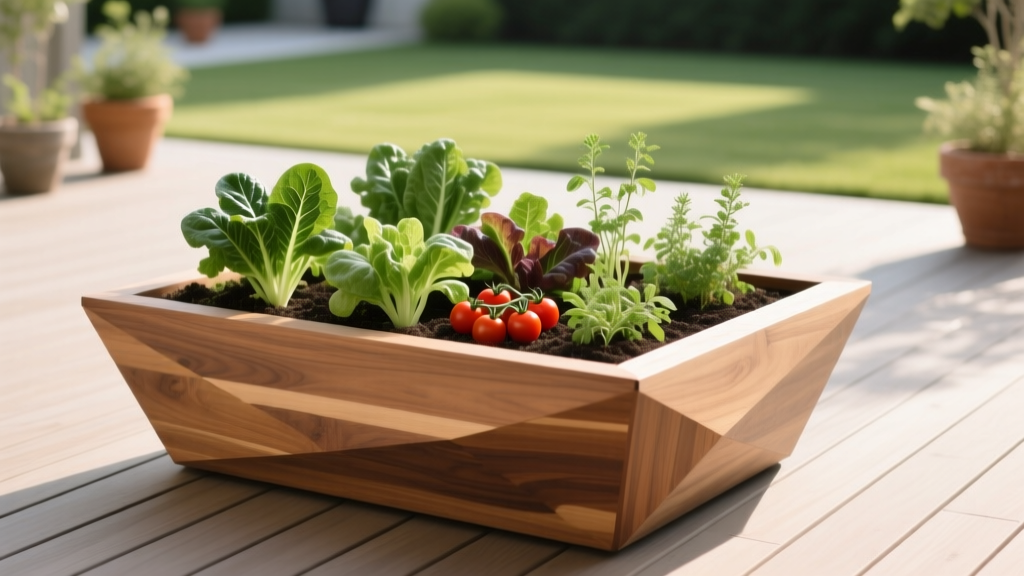
Deck Planter Box Vegetable Garden
The tomatoes you swore you’d “definitely plant this year” are still in their plastic six-packs, slumped on the deck table. The yard—if you have one—is either shaded, sloped, or claimed by the dog. And if you’re renting, you might be staring at a lease that politely suggests you don’t dig up the lawn. Here’s the good news: a deck planter box vegetable garden can be designed like a tiny, efficient landscape—one that produces real food in a footprint as small as 2 ft x 6 ft, without turning your outdoor space into a cluttered mess.
Think of this as a design-build walk-through: we’ll lay out the deck like a mini site plan, choose planter box dimensions that match what vegetables actually need, and plant varieties that thrive in containers (not just survive). Along the way, I’ll give you concrete spacing, sun targets, and budget numbers so you can build something that looks intentional—and harvestable.
Start With the “Deck Reality Check”
Measure the usable footprint (and keep the walkway)
Before you buy a single board, grab a tape measure. On decks, the biggest mistake is overfilling the space and leaving no circulation. A practical rule: keep a 36-inch clear path for comfortable movement (tight decks can go down to 30 inches, but you’ll feel it when carrying a watering can).
Typical layout targets I use for small decks:
- Minimum “garden strip” depth: 18–24 inches along the railing
- Minimum seating zone: 4 ft x 4 ft (one chair and side table)
- Clearance behind a chair: 24 inches so you’re not scraping planter corners
Confirm sunlight hours where the planters will sit
Vegetables are honest: fruiting crops need sun. Aim for 6–8 hours of direct sunlight for tomatoes, peppers, cucumbers, and most herbs. Leafy greens can produce with 4–6 hours, especially if the hottest afternoon sun is filtered.
If you’re unsure, use a phone sun-tracking app for one day or do the old-school method: check the spot at 9 a.m., noon, 3 p.m., and 6 p.m. The difference between 4 hours and 7 hours is the difference between “cute plant” and “weekly harvest.”
Weight and drainage: the two deck-specific constraints
Planter boxes filled with wet soil get heavy fast. Also, decks hate standing water. Build in drainage and use saucers or a drainage mat where needed so water doesn’t puddle against the house.
As a baseline, a 2 ft x 6 ft planter that’s 12 inches deep holds roughly 12 cubic feet of mix (about 0.44 cubic yards). Bagged potting mix can be pricey, so we’ll plan soil volume strategically.
Design Principles That Make a Deck Garden Feel Like a Designed Space
Principle 1: One long line beats five small pots
Visually, a deck reads best with fewer, larger planters. A single continuous planter box along a railing looks like built-in architecture, not a yard sale of containers. It also simplifies irrigation.
Try one of these “designer” layouts:
- Railing run: one 18–24 inch deep planter running 6–10 ft along the rail
- L-shape: a 2 ft x 6 ft plus a 2 ft x 4 ft planter in a corner to create a green “room” edge
- Galley style: two parallel planters with a 36-inch walkway between (best for long, narrow decks)
Principle 2: Match planter depth to the crop (not to the lumber you found)
Planter depth determines which vegetables thrive without constant stress. The University of Minnesota Extension notes that container-grown vegetables need adequate container size and consistent moisture management (University of Minnesota Extension, 2020). Here’s a practical deck-friendly depth guide:
- 8–10 inches deep: lettuce, spinach, arugula, radishes, green onions
- 12 inches deep: bush beans, beets, chard, strawberries, many herbs
- 18 inches deep: peppers, eggplant, compact tomatoes, carrots (short types)
- 24 inches deep: indeterminate tomatoes (best with trellis), potatoes (if you mound)
Principle 3: Put height at the back, spillers at the edge
Use the same composition rule designers use in ornamental beds: tall structure in back (toward the railing or wall), medium in the middle, and trailing/spilling plants at the front edge. It keeps the deck from feeling blocked while still maximizing growing area.
“The most productive small spaces are designed in layers—vertical structure, mid-layer foliage, and an accessible harvesting edge.” — Clare Cooper Marcus, landscape architect and author focusing on human-centered outdoor spaces (Marcus, 1992)
Principle 4: Vertical growing is not optional on a deck
If you want real yields, build upward. A simple trellis at 5–6 ft tall can double the productive area of a 2 ft deep planter. Cucumbers, pole beans, and cherry tomatoes are especially cooperative.
Layout Strategies (With Dimensions You Can Build Today)
Strategy A: The 2' x 6' “Railing Farm” planter
This is my go-to for renters and homeowners who want a single, tidy feature. Build a box at 24 inches wide by 72 inches long and 12–18 inches deep, placed tight to the railing (leave a 1–2 inch gap for airflow and cleaning).
Planting layout example for a 2' x 6' box:
- Back row: 2 trellised cucumbers spaced 18 inches apart
- Middle: 3 basil plants spaced 12 inches apart
- Front edge: 6 lettuces spaced 8–10 inches apart (succession planted)
Strategy B: The L-shaped “Outdoor Kitchen Garden”
For cooks: create an herb-and-salad corner near the door. Combine a 2 ft x 4 ft herb box with a 2 ft x 6 ft vegetable box. This layout keeps harvesting within a few steps of the kitchen, which is how gardens actually get used.
Add a slim shelf (even a simple board on brackets) at 42 inches high for tools, snips, and a small bin of compostables.
Strategy C: The “Privacy + Produce” screen
If your deck faces neighbors, a planter can act as a living screen. Use a 18-inch deep box and install a sturdy trellis panel to 6 ft tall. Train pole beans, cucumbers, or a small-fruited squash up the panel. It’s softer than a solid screen—and you can eat it.
Material Choices, Costs, and DIY Alternatives
A deck planter can be built in a weekend with basic tools. Costs vary widely by lumber type and how you handle irrigation. Here are realistic numbers (in USD) you can plan around:
- 2' x 6' planter lumber + screws: $80–$180 (cedar typically higher than pine)
- Potting mix/raised bed mix: $8–$15 per 2-cu-ft bag; a 12-cu-ft box often needs 6 bags ($48–$90)
- Drip irrigation kit (basic): $25–$60
- Trellis panel + hardware: $20–$50
- Seeds/starts: $20–$45 for a well-planted box
DIY alternatives that still look polished:
- Fabric grow bags inside a simple wood frame (keeps the “built-in” look but reduces rot risk)
- Stock tank planters (usually 2 ft x 4 ft sizes are common; drill drainage holes and elevate slightly)
- Railing planters for herbs, paired with one deeper floor box for tomatoes/peppers
Comparison Table: Planter Box Options for Deck Vegetable Gardens
| Planter Type | Best For | Typical Size | Approx. Cost | Notes |
|---|---|---|---|---|
| DIY cedar box | Long-term, built-in look | 2' x 6' x 18" deep | $150–$300 | Great durability; heavier; higher upfront cost |
| DIY pine box (sealed) | Budget builds | 2' x 6' x 12" deep | $90–$180 | Use liner; plan to refresh/repair sooner |
| Stock tank | Fast setup, modern style | 2' x 4' x ~24" deep | $80–$160 | Drill drainage; can heat up in full sun |
| Fabric grow bags | Renters, lightweight options | 10–30 gallon bags | $8–$25 each | Excellent drainage; needs more frequent watering |
Step-by-Step Setup (A Clean Build That Doesn’t Rot Out)
- Choose the footprint: Mark out the box with painter’s tape. Confirm you still have a 36-inch walkway.
- Build or assemble the planter: For most vegetables, target 12–18 inches depth. Add corner bracing so the box doesn’t bow.
- Add drainage: Drill 1/2-inch holes every 8–12 inches along the base if it’s a closed-bottom design, or use a slatted base with gaps.
- Line the interior: Use landscape fabric to protect wood and keep soil from washing out. Avoid fully sealing the bottom—roots need oxygen.
- Fill with a light, fertile mix: Use a raised bed mix or a container blend. A practical recipe is 2/3 raised bed mix + 1/3 compost for top performance (don’t use heavy native soil on a deck).
- Install vertical supports now: Place trellis posts inside the box corners and bolt them. Don’t wait until plants are big—retrofits are messy.
- Plant by mature size: Follow spacing (below). Water thoroughly until it drains.
- Mulch the surface: Add 1 inch of straw or fine bark to reduce evaporation.
- Set up watering: Hand-watering works, but drip irrigation prevents weekend guilt spirals.
Plant Selection: Specific Varieties That Actually Work in Planter Boxes
The goal is to pick vegetables bred for containers, compact growth, and high yield per square foot. The National Gardening Association’s guidance on small-space food gardening emphasizes matching plant habit to container constraints (National Gardening Association, 2021).
Tomatoes (choose compact or container-bred)
- ‘Patio Choice Yellow’: compact habit; reliable in pots; great for snacking and salads.
- ‘Sungold’ (cherry): extremely productive; needs a sturdy trellis; worth it if you have 8 hours sun.
- ‘Celebrity’ (semi-determinate): dependable slicer; manageable with staking in an 18–24 inch deep box.
Spacing: 1 tomato per 18–24 inches (or one per 10–15 gallon container equivalent). Plant deeper than the pot line for stronger rooting.
Peppers (high yield, tidy plants)
- ‘Lunchbox’ mini sweet peppers: productive, compact, great for decks because plants don’t sprawl.
- ‘Jalapeño M’: consistent heat level and strong yields in containers.
- ‘Shishito’: prolific and perfect for quick harvest meals.
Spacing: 12–15 inches apart; stake if windy.
Leafy greens (the fast wins)
- ‘Salad Bowl’ red/green leaf lettuce: cut-and-come-again harvesting.
- ‘Lacinato’ kale: upright, handsome, productive; tolerates cool weather well.
- ‘Bloomsdale Long Standing’ spinach: reliable spring/fall performer.
Spacing: lettuce 8–10 inches; kale 12–18 inches; spinach 6–8 inches.
Cucumbers and beans (vertical stars)
- ‘Diva’ cucumber: parthenocarpic (sets fruit without pollination), great for semi-enclosed decks.
- ‘Bush Champion’ cucumber: if you don’t want a trellis, this stays compact (still benefits from support).
- ‘Kentucky Wonder’ pole bean: classic trellis crop with high yield in narrow planters.
Spacing: cucumbers 12–18 inches; pole beans 4–6 inches along a trellis.
Herbs (the flavor backbone)
- Basil ‘Genovese’: thrives in warm deck microclimates; pinch weekly.
- Thyme: drought-tolerant, edges nicely; good “spiller” at the front.
- Chives: perennial in many climates; great for container borders.
Spacing: basil 12 inches; thyme 10–12 inches; chives 8–10 inches.
Three Real-World Scenarios (and How I’d Design Each)
Scenario 1: The renter with a 6' x 10' apartment deck
You need portability and low commitment. I’d do two 10-gallon grow bags for tomatoes, one narrow 8-inch deep railing planter for herbs, and one 2 ft x 4 ft x 10 inch fabric-lined wood frame for salad greens. Keep everything in one side band so the deck still functions as outdoor living.
Estimated spend: $120–$220 depending on how fancy you get with a trellis and soil.
Scenario 2: The townhouse deck with strong afternoon sun and wind
Afternoon sun is great; wind is the issue. I’d anchor a 2 ft x 6 ft x 18 inch box along the railing and build a rigid trellis panel. Choose sturdier stems: peppers, basil, kale, and trellised beans. Skip top-heavy indeterminate tomatoes unless you can bolt supports. Add a windbreak effect by planting the trellis side with beans first.
Weekly expectation: 45–60 minutes (more during heat waves).
Scenario 3: The suburban deck that gets only 4–5 hours of sun
This is where people waste money chasing tomatoes. I’d design for leafy and root crops: lettuce, spinach, arugula, radishes, green onions, parsley, cilantro. Use a 12-inch deep box and plant in bands for constant harvest. You’ll get more food by leaning into what the light supports.
Smart add-on: a reflective light-colored panel on the shady side to bounce light back (even a painted board can help).
Maintenance Expectations (So the Garden Doesn’t Become Another Chore)
Deck planters dry out faster than in-ground beds. In summer, expect watering 4–7 days per week depending on sun, wind, and container material. Drip irrigation can cut your hands-on time dramatically.
Weekly time budget for a typical 2' x 6' vegetable planter:
- 30–45 minutes/week in mild weather (watering, harvesting, quick pest check)
- 60–90 minutes/week during peak summer (more watering, tying vines, pruning)
Seasonal task rhythm
- Spring: refresh top 2 inches with compost; plant cool-season greens; set trellises early.
- Early summer: switch to heat lovers; mulch; start a consistent feeding schedule.
- Mid/late summer: succession sow lettuce in partial shade; prune tomatoes for airflow; harvest frequently to keep plants producing.
- Fall: replant spinach and kale; pull summer crops; clean supports.
- Winter (if freezing climates): empty and store grow bags; for wood boxes, top with mulch and cover soil to reduce nutrient loss from winter rains.
Small Details That Make It Feel Designed (Not Just Functional)
Hide the practical stuff in plain sight. Run drip lines along the back edge and clip them neatly. Choose one consistent planter material so the garden reads as a “set.” If your deck is tight, use a narrow tool caddy that hangs on the inside of the railing.
Also: don’t underestimate lighting. A simple warm string light overhead makes the planter garden feel like part of the living space, not a separate project you only visit with a watering can.
A Sample Planting Plan for a 2' x 6' Deck Planter Box
If you want a proven mix that looks good and harvests well, here’s a balanced plan (assumes 6–8 hours sun and a trellis):
- Back (trellis): 2 cucumbers (‘Diva’) at 18-inch spacing
- Middle: 2 basil (‘Genovese’) at 12-inch spacing + 2 peppers (‘Shishito’) at 15-inch spacing
- Front: 6 lettuce (‘Salad Bowl’) at 9-inch spacing, replanted every 3–4 weeks
Feeding schedule: a diluted liquid fertilizer every 10–14 days once plants are established, especially for cucumbers and peppers. If you prefer organic, compost tea or fish/seaweed blends work well—just be consistent.
By the time your neighbors notice the green wall at the railing, you’ll already be in the rhythm: snip herbs on your way inside, pick cucumbers before they get seedy, re-seed lettuce like it’s a pantry staple. The deck stays livable, the planters look intentional, and that “I should really grow something” feeling gets replaced with an actual bowl of food from six square feet of space.
Sources: University of Minnesota Extension (2020), “Vegetable gardening in containers”; National Gardening Association (2021), guidance on food gardening in small spaces; Marcus, C.C. (1992), research and writing on outdoor space design and use.