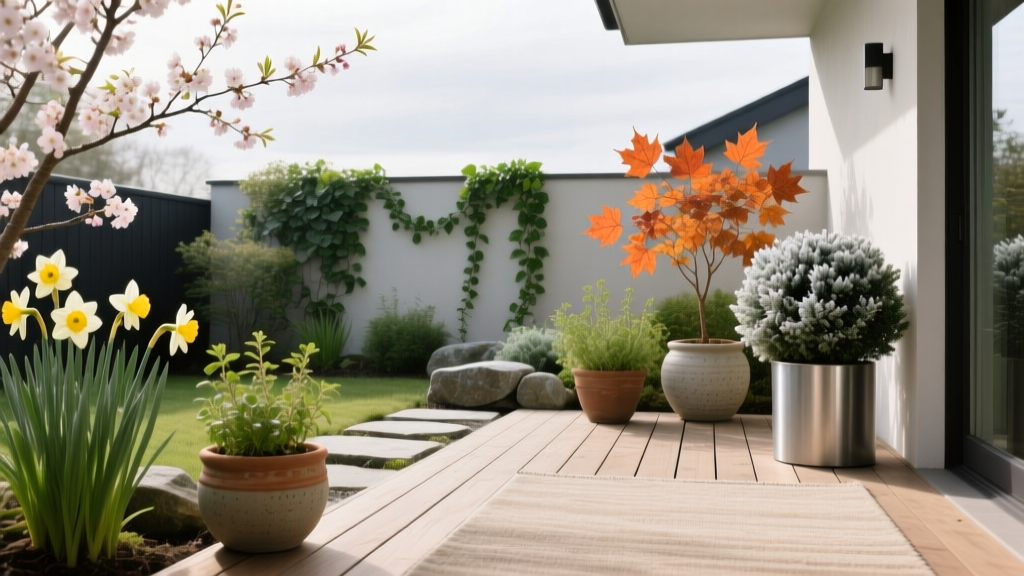
Porch Garden Ideas for Every Season
The first warm Saturday hits, and suddenly the porch feels like a blank stage. You’ve got a chair that wobbles, a welcome mat that’s seen better days, and a sun patch that moves like a spotlight from morning to afternoon. You want greenery and color, but you also want to still open the door, set down groceries, and not turn watering into a daily chore. That tension—beauty versus real life—is exactly where a great porch garden design starts.
Think of your porch like an outdoor room with three requirements: circulation (you have to walk through it), function (mail, packages, seating, maybe muddy boots), and atmosphere (plants, fragrance, texture, seasonal change). The good news: with the right layout, you can get all three in as little as 18–24 sq ft of planting space.
Start with the “Porch Triangle”: Door, Walkway, and View
Before buying plants, map what you already do on the porch. I use a simple triangle: the door swing, the walking path, and the main view from inside (usually the living room window). Your garden should frame these points—not block them.
Measure first (it changes everything)
Grab a tape measure and jot down four numbers:
- Clear walking width: aim for at least 36 inches from door to steps/driveway for comfortable traffic.
- Door swing radius: most exterior doors need 30–36 inches of clear arc. No pots in that zone.
- Railing height: commonly 36 inches; perfect for rail planters and trailing plants.
- Sun hours: track direct sun. Many flowering annuals want 6+ hours; shade lovers are happy at 2–4 hours.
Layout strategy: “Layered edges, open center”
For most porches, the winning arrangement is to plant along the perimeter and keep the center open. Use three layers:
- Anchor layer (floor level): 2–3 larger containers that visually “hold” the design.
- Mid layer (knee to waist height): smaller pots or grouped planters for fullness.
- Vertical layer (eye level): hanging baskets, wall planters, or a slim trellis.
Spacing rule that prevents clutter: leave 3–5 inches between pot rims in a cluster so plants read as a composition rather than random objects.
Choose Containers Like a Designer: Scale, Material, and Drainage
Porch plants succeed or fail based on containers more than “green thumbs.” The porch microclimate—wind tunnels, roof overhangs, heat from siding—can dry pots fast. Select containers that buffer moisture and match the scale of your architecture.
Container sizing that reduces maintenance
Bigger pots buy you time. As a baseline:
- Small accent pot: 8–10" diameter (dries quickly; best for succulents or herbs you’ll water often)
- Workhorse pot: 12–16" diameter (great for mixed seasonal planting)
- Anchor pot: 18–22" diameter (supports shrubs, small grasses, and multi-season structure)
If you want a weekly watering rhythm (not daily), aim for at least 14–16" diameter containers for sun-exposed flowers.
Drainage and soil: the non-negotiables
Every container needs a drainage hole. Use a quality potting mix (not garden soil) to avoid compaction. If you’re building a self-watering setup, reserve 2–3 inches at the bottom for a reservoir or use a commercial self-watering planter.
“Container plants depend entirely on you for water and nutrients; the potting medium and container size largely determine how forgiving the system will be.” — University of Illinois Extension, 2023
Season-by-Season Planting Plans (With Specific Varieties That Perform)
Seasonal porch gardens work best when you design for quick change-outs in a few key pots, while keeping a couple of “evergreen” anchors that persist through multiple seasons.
Spring: bright, cool-weather color that shrugs off chilly nights
Spring porches shine with plants that tolerate swings between warm afternoons and cold evenings. Look for varieties bred for compact habit and long bloom.
- Pansy (Viola × wittrockiana) ‘Cool Wave Blue Skies’: trailing habit that spills elegantly over rims; great in 12–14" pots.
- Snapdragon (Antirrhinum majus) ‘Rocket Mix’: upright “architecture” for the mid layer; space plants 6–8" apart.
- Heuchera ‘Caramel’: foliage color that bridges seasons; handles part shade and looks refined in a simple clay pot.
- Daffodil (Narcissus) ‘Tête-à-Tête’: compact bulbs for early punch; plant 6 bulbs in a 12" pot in fall for spring display.
Summer: heat-ready color with built-in drought tolerance
Summer porch planting has two enemies: heat radiating from walls and inconsistent watering during vacations. Choose varieties that keep blooming even if you miss a day.
- Calibrachoa ‘Superbells Yellow’: heavy bloom, less deadheading; thrives in sun with 6+ hours of direct light.
- Lantana ‘Landmark Citrus’: excellent heat tolerance; a pollinator magnet; best as a focal plant in a 16–18" pot.
- Sweet potato vine (Ipomoea batatas) ‘Marguerite’: bold chartreuse foliage for contrast; use as a spiller.
- Lavender (Lavandula angustifolia) ‘Hidcote’: fragrance by the door; prefers full sun and sharp drainage.
Fall: texture, berries, and color that looks good in low light
Fall porch gardens should be readable at dusk, when days shorten. Lean into texture and deeper tones.
- Ornamental pepper (Capsicum annuum) ‘Black Pearl’: glossy dark leaves and red fruit; excellent in a 10–12" pot.
- Garden mum (Chrysanthemum) ‘Ruby Mound’: classic porch color; buy budded plants for longer show.
- Ornamental kale ‘Redbor’: dramatic frills; keeps going through light frosts.
- Carex oshimensis ‘Evergold’: grass-like brightness; reliable in part shade; great for continuity into winter.
Winter: structure, evergreen calm, and light-catching accents
Winter porch gardens aren’t about blooms; they’re about form. If you can keep just two containers looking intentional through winter, the whole house feels cared for.
- Dwarf Alberta spruce (Picea glauca ‘Conica’): classic porch “mini tree” form; works in an 18–22" pot.
- Boxwood (Buxus) ‘Green Velvet’: tidy mounds; tolerates shearing; elegant near doors.
- Red-twig dogwood cut stems (Cornus sericea): add vertical red lines in arrangements.
- Wintergreen (Gaultheria procumbens): evergreen leaves with red berries; best in part shade and protected pots.
Design note: in cold climates, container roots are more exposed. If winter lows dip below 20°F, group pots together and insulate with straw or wrap containers with burlap to reduce freeze-thaw stress.
A Comparison Table: Best Porch Plant Options by Conditions
| Porch Condition | Top Plant Picks (Varieties) | Why They Work | Minimum Pot Size |
|---|---|---|---|
| Full sun (6–8 hrs) | Calibrachoa ‘Superbells Yellow’, Lantana ‘Landmark Citrus’, Lavender ‘Hidcote’ | Heat-tolerant, long bloom, drought resilience | 12–18" |
| Part shade (3–5 hrs) | Heuchera ‘Caramel’, Carex ‘Evergold’, Begonia ‘Whopper Red Bronze Leaf’ | Strong foliage color, steady performance in filtered light | 12–16" |
| Bright shade (0–2 hrs) | Ferns (Boston fern), Helleborus (Lenten rose), Wintergreen (Gaultheria) | Texture-driven, handle low sun, look lush under cover | 14–18" |
| Windy/exposed porch | Geranium (Pelargonium) ‘Calliope Dark Red’, Rosemary ‘Arp’, Compact grasses | Sturdier stems, less petal shatter, better drought tolerance | 14–18" |
Three Real-World Porch Scenarios (With Layouts That Actually Fit)
Scenario 1: A 4' x 6' apartment porch with strict rules (no drilling, limited water)
This is a common rental constraint: you need greenery, but you can’t install hooks or wall planters, and you may only have a small watering can. Here’s a layout that keeps a 36" clear path to seating.
Plan: Two anchor pots in back corners (away from door swing), a slim railing planter (if allowed), and one movable herb caddy near the kitchen-facing side.
- Back left: 16" lightweight resin pot with Carex ‘Evergold’ + trailing sweet potato vine
- Back right: 16" pot with begonia ‘Whopper’ for color in part shade
- Center accent: 10" pot of mint (kept contained) or thyme
DIY alternative: Use a rolling plant caddy ($12–$25) so you can pull plants out for watering without dripping across the porch.
Scenario 2: A sunny front stoop (3 steps) where you need “curb appeal” fast
A stoop is basically a tiny stage: people see it from the street, and it needs symmetry to feel calm. If the stoop is about 5' wide, use two matching anchor pots flanking the steps.
Plan: Two 18" pots, one doormat zone, and one narrow trough planter against the wall (if space allows).
- Anchors: Two Dwarf Alberta spruce (winter) swapped to lantana (summer) or kept evergreen year-round in milder climates
- Seasonal skirt planting: Underplant with pansies (spring), calibrachoa (summer), ornamental kale (fall)
Cost note: Two quality 18" composite pots can run $40–$90 each, but they last. If that’s steep, use galvanized tubs ($18–$30) and drill 6–8 drainage holes.
Scenario 3: A covered porch with morning shade and bright afternoons (the “mixed light” challenge)
Mixed light porches can be tricky: your sun-loving plants stretch, and your shade plants scorch at 3 p.m. The fix is to zone by microclimate: outer edge gets more sun; wall side stays cooler.
Plan: Put sun-tolerant bloomers on the rail/front edge, and foliage-forward plants closer to the house.
- Front edge: geranium ‘Calliope Dark Red’ + calibrachoa in a 24" window box (space plants 8–10" apart)
- Against wall: heuchera ‘Caramel’ + fern in 14–16" pots for cool texture
- Vertical accent: a freestanding trellis pot with star jasmine in warm climates or black-eyed Susan vine as a summer annual
Step-by-Step: Set Up a Four-Season Porch Garden in One Weekend
This is the workflow I use when designing a porch that needs to look good now and be easy to refresh later.
- Sketch the porch footprint with door swing and the 36" walking path marked.
- Pick your two anchor containers (typically 18–22") and place them first—usually flanking steps or corners.
- Add one “seasonal swap” zone: a window box (24–36") or two 12–14" pots that you’ll replant 3–4 times a year.
- Choose a simple plant formula per container: thriller (upright) + filler (mounding) + spiller (trailing). Aim for 3–5 plants in a 16" pot.
- Install drip trays or hidden saucers to protect decking. If water stains are a concern, raise pots on feet (1" lift helps airflow).
- Water deeply after planting until it drains freely; then top-dress with a thin layer of mulch or fine bark to slow evaporation.
- Add lighting last: a battery lantern or solar stake near the largest pot makes the entire planting feel intentional after dark.
Budget Planning: What You’ll Spend (and How to Spend Less)
A porch garden can be a modest refresh or a full seasonal system. Here are realistic ranges:
- Starter setup (2–3 pots, seasonal annuals): $75–$180
- Mid-range (2 anchor pots, 2 swap pots, soil, fertilizer): $200–$450
- Long-term (evergreen anchors + quality containers + lighting): $500–$900
DIY alternatives that look designed:
- Painted terracotta: One exterior primer + paint can refresh mismatched pots for about $25–$40.
- Wood crate risers: Flip a sturdy crate to create height variation (just keep it clear of constant wetness).
- Propagation swaps: Trade cuttings (coleus, sweet potato vine) with neighbors to reduce annual costs.
Maintenance Expectations: What It Takes to Keep It Looking Sharp
A well-designed porch garden shouldn’t demand daily attention. Plan on 30–60 minutes per week during peak summer, less in spring/fall, and minimal time in winter (mostly checking moisture).
Weekly rhythm
- Watering: typically 2–4 times/week in summer for sun pots; 1–2 times/week in shade, depending on container size and wind.
- Deadheading: 10 minutes/week for flowering annuals (less if you choose self-cleaning varieties like many calibrachoa).
- Fertilizing: a liquid feed every 10–14 days or a slow-release fertilizer applied once every 8–12 weeks.
More Articles