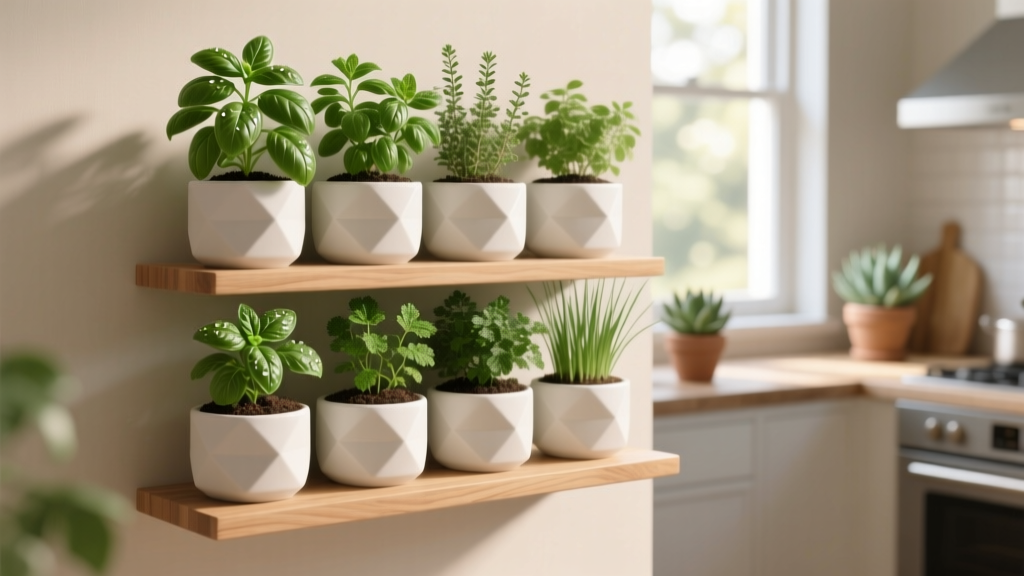
Terrace Year-Round Herb Container Plan
The wind is doing that terrace trick again—whipping around the corners, drying out pots faster than you can water, and turning lightweight containers into bowling balls the moment you open the door. Inside, you’ve got a half-used bundle of basil softening in the fridge and a recipe calling for “a handful of fresh thyme.” You can grow herbs out here, year-round, but the terrace needs a plan that respects reality: sun that shifts by season, reflected heat in summer, shade from nearby buildings, and the simple fact that you want dinner herbs without hauling out a hose every day.
Think like a landscape designer for a small, exposed site: define microclimates, reduce maintenance, and create a layout that makes harvesting as easy as stepping outside with kitchen scissors. The goal isn’t a random collection of pots—it’s a compact, good-looking herb system that produces in every month and still feels like a terrace you want to sit in.
Design principles that make terrace herbs work all year
Start with a “kitchen reach” zone and a “storage” zone
Most terraces fail as herb gardens because the good pots end up too far from the door, or the high-use herbs are stuck behind low-use plants. Split your layout into:
- Kitchen reach (primary harvest zone): 3–6 containers within 6–10 feet of the door. These hold the herbs you snip weekly.
- Storage/growth zone: everything else—backup perennials, overwintering pots, propagation trays, and any herb you use occasionally.
This is a small-space trick with a big impact: harvesting stays effortless, so plants get used rather than neglected.
Design for microclimates: sun, wind, and heat reflection
Terraces often have “hot wall” zones (sun bouncing off brick or stucco) and “wind tunnel” zones (between railings and adjacent buildings). You can use both.
- Hot wall: Great for Mediterranean herbs (rosemary, thyme, oregano). Place pots 12–18 inches away from the wall so roots don’t bake.
- Wind tunnel: Tough herbs can handle it, but your potting mix will dry quickly. In windy corners, use heavier containers or add ballast (a few bricks in the bottom).
- Shade pockets: Mint, chives, parsley, and cilantro tolerate 4–5 hours of sun better than basil does.
Container sizing: choose fewer, larger pots (your future self will thank you)
More soil volume means steadier moisture and less temperature swing—crucial for year-round growth. A practical baseline:
- 12-inch diameter pot (approx. 3–5 gallons): single basil plant, parsley, or a compact rosemary.
- 16–18-inch pot (approx. 7–10 gallons): a mixed “pizza herb” pot (oregano + thyme + marjoram) or mint (alone).
- 24-inch trough planter: ideal for a snipping row—chives, parsley, cilantro—spaced so you can cut without crowding.
If you only remember one number: perennial herbs are happiest when you give them at least 2–5 gallons of soil per plant, because they stay in the same pot longer and build woody roots.
Soil mix and drainage: engineer it like a planter bed
Use a high-quality potting mix (not garden soil) and improve it for long-term performance. For most herbs, aim for fast drainage with enough organic matter to hold moisture.
- Blend: 2 parts potting mix + 1 part compost + 1 part perlite/pumice.
- Drainage: Every pot must have holes; add pot feet or risers so water can escape.
Overly wet containers are the fastest way to lose thyme, rosemary, and lavender in winter.
“The key to successful container growing is maintaining a balance between water retention and drainage—containers dry quickly, but waterlogged roots fail even faster.” — University of Illinois Extension, Container Gardening (2020)
A layout strategy you can sketch in 10 minutes
Use a simple grid: rail line + door line + anchor corner
Stand at your terrace door and mark three invisible lines:
- Door line: A 2–3 foot wide path so you can step out, harvest, and water without obstacle.
- Rail line: The edge where sun is best and airflow is high—great for rosemary, thyme, oregano.
- Anchor corner: A “weighty” visual corner using the largest pot (or two) to stabilize the design and break wind.
For a typical small terrace (say 6 ft x 12 ft), you can fit a year-round herb plan with 8–12 containers without feeling cramped.
Spacing for access: leave harvesting gaps on purpose
It’s tempting to pack pots tight, but herbs need elbow room. Practical spacing targets:
- Between pots: 4–6 inches minimum so you can rotate containers and check for pests.
- Between a pot and a wall/railing: 6–12 inches for airflow and watering access.
- Path width: 24 inches is comfortable; 18 inches works if space is tight.
Sunlight targets: map your terrace in summer and winter
Most herbs perform well with 6+ hours of sun, but you can still grow a strong selection with 4–5 hours, especially in bright, reflective spaces. Keep notes for two weeks in:
- Late June: where you get the longest sun exposure
- Late December: where sun actually reaches the terrace
This quick mapping exercise saves money—because you won’t keep replacing sun-loving basil in a winter shade pocket.
Plant selection: varieties that earn their space
Evergreen backbone (structure + winter harvesting)
These are your “architectural” herbs—the ones that keep the terrace looking alive when annuals fade.
- Rosemary ‘Arp’: Known for better cold tolerance than many rosemary types; ideal for a large pot near the rail line where it gets 6–8 hours of sun. It stays upright and gives year-round snips in mild winters.
- Thyme ‘German Winter’ (Thymus vulgaris): Dense, hardy, and a reliable winter performer. Put it in a 12-inch pot with very free-draining mix.
- Sage ‘Berggarten’: Broad, silvery leaves that handle heat and look intentional in design. Great in a 12–14 inch pot; snip lightly to keep it compact.
High-yield “cut-and-come-again” herbs (weekly kitchen workhorses)
- Chives (Allium schoenoprasum): Extremely dependable; tolerates partial sun and regrows fast after cutting. Plant in a trough, spacing clumps 6 inches apart.
- Parsley ‘Giant of Italy’: Bigger leaves and sturdy stems; handles cooler weather well. In many climates it overwinters and re-sprouts in spring.
- Oregano ‘Greek’ (Origanum vulgare subsp. hirtum): More intense flavor; thrives in heat and doesn’t sulk in dry air.
Seasonal stars (rotate for constant flavor)
Annual herbs shine in warm months, and a few cool-season herbs carry you through shoulder seasons.
- Basil ‘Genovese’: Classic pesto basil; give it the warmest, brightest spot and steady watering.
- Basil ‘Prospera’: A modern downy-mildew-resistant basil option—helpful on humid terraces where airflow is inconsistent.
- Cilantro ‘Slow Bolt’: Best for spring/fall; in summer heat it bolts quickly, so treat it as a rotation crop.
- Dill ‘Bouquet’: Performs well in a deeper pot (at least 10–12 inches deep) and attracts beneficial insects when it flowers.
For food safety and quality, follow established harvest practices—snip above a node, avoid stripping more than a third of the plant at once, and keep herbs clean. (USDA guidance on safe handling of fresh produce is a helpful baseline even for home harvests.) USDA Food Safety and Inspection Service, “Safe Handling of Fresh Fruits and Vegetables” (2017)
Comparison table: pick containers that match your maintenance style
| Container type | Best for | Typical size to target | Watering frequency (summer) | Approx. cost (USD) |
|---|---|---|---|---|
| Terra-cotta pot | Mediterranean herbs (thyme, oregano, sage) | 12–16 in diameter | Every 1–3 days | $18–$45 |
| Glazed ceramic | Showpiece “anchor” pot; rosemary | 16–20 in diameter | Every 2–4 days | $40–$120 |
| Plastic/resin pot | Budget builds; windy terraces (lighter but can be ballasted) | 12–18 in diameter | Every 2–4 days | $12–$35 |
| Trough planter | Cutting row of chives/parsley/cilantro | 24–30 in length | Every 2–3 days | $25–$80 |
| Self-watering container | Renters, travelers, low-maintenance setups | 12–18 in diameter | Refill reservoir every 5–10 days | $35–$95 |
Three real-world terrace scenarios (and how the plan adapts)
Scenario 1: The sunny, windy high-rise ledge (6+ hours sun, constant airflow)
This is the terrace that fries basil by July and topples lightweight pots. The move here is to prioritize drought-tolerant herbs and add weight.
Design approach: Place two large “anchor” containers (at least 16–20 inches diameter) in the windiest corner, then line the rail with terra-cotta pots that dry quickly but keep Mediterranean herbs happy. Add a narrow trough near the door for chives and parsley where you’ll water more often.
Plant picks: Rosemary ‘Arp’, thyme ‘German Winter’, oregano ‘Greek’, sage ‘Berggarten’, chives. Basil goes in a slightly shaded pocket (morning sun, afternoon protection) or in a self-watering pot.
Scenario 2: The part-shade urban terrace (4–5 hours sun, bright reflected light)
This is the “it looks bright but plants stretch” space. The trick is selecting herbs that actually tolerate fewer sun hours and keeping the layout open to maximize light.
Design approach: Use lighter-colored containers to bounce light, keep pots away from tall rail planters that cast shade, and make the kitchen reach zone dominant—so you’re harvesting the plants that actually thrive.
Plant picks: Chives, parsley ‘Giant of Italy’, mint (in its own pot), lemon balm (also contained), and thyme if you can give it the sunniest spot.
Scenario 3: The renter’s terrace with rules (no drilling, limited weight, easy to move)
If you have to be able to relocate quickly, avoid massive ceramic pots and build a modular system.
Design approach: Use 10–12 mid-sized resin pots (12-inch diameter) and one lightweight trough. Group them on rolling plant caddies so you can pull everything back from the rail during storms.
Plant picks: Compact rosemary (or keep rosemary as a seasonal plant and overwinter indoors), thyme, oregano, chives, parsley, basil ‘Prospera’ for summer reliability.
Step-by-step setup: build the terrace herb plan in an afternoon
- Measure the usable footprint. Mark a clear path at least 24 inches wide from the door to your seating area.
- Identify two anchor points. Choose the windiest corner and the sunniest rail section.
- Choose 8–12 containers total. A balanced starter: 2 large anchors (16–20"), 4 medium pots (12–14"), 1 trough (24–30"), plus 1–3 seasonal swap pots.
- Mix soil in a tub. Use the 2:1:1 blend (potting mix : compost : perlite/pumice). Fill containers to within 1 inch of the rim for easier watering.
- Plant the evergreen backbone first. Rosemary/sage/thyme go in their final positions—moving them later is annoying and stressful for roots.
- Add the weekly workhorses. Plant chives/parsley in the trough near the door line. Space plants 6–8 inches apart so they bulk up without tangling.
- Install simple irrigation support. At minimum, add saucers for indoor-style watering control (if allowed) or use pot risers so drainage is clean. If you travel, add 1–2 self-watering pots.
- Mulch lightly. A 1/2-inch top layer of fine bark or gravel reduces evaporation and keeps soil from splashing onto leaves.
- Label and date. Especially for cilantro, dill, and basil—knowing when you planted helps you time replacements.
Budget planning (with smart DIY swaps)
You can build this plan in two price lanes: a long-lasting “designer terrace” version and a practical renter-friendly version.
- Starter budget ($120–$220): Use resin pots, a basic trough, and small nursery herbs. Expect to spend about $6–$10 per herb plant and $12–$35 per container.
- Mid-range ($250–$450): Add 1–2 glazed anchors, upgraded potting mix, and one self-watering container for basil or parsley.
- Premium ($500–$900): Coordinated containers, multiple self-watering systems, and larger specimen rosemary or bay laurel trained as a standard.
DIY alternatives that don’t look cheap:
- Convert food-grade buckets into planters (drill drainage, paint the exterior, add a saucer). Cost can be as low as $5–$15 per planter.
- Build a simple slatted riser platform from scrap wood to lift pots off the terrace floor, improving drainage and reducing staining.
- Use gravel as ballast in the bottom third of lightweight pots in wind zones (only when drainage is excellent and the plant doesn’t require frequent repotting).
Maintenance expectations: what it really takes
For a terrace herb collection of 8–12 containers, plan on 30–45 minutes per week in peak season and 10–20 minutes per week in winter (mostly checking moisture and harvesting). The time is small, but consistency matters more than effort.
Weekly routine (growing season)
- Water checks: 2–4 times per week in summer; daily in heat waves. Most herbs prefer drying slightly between waterings, but basil and parsley are less forgiving.
- Harvesting: Snip often—frequent light cuts keep plants compact and productive.
- Quick pest scan: Look under leaves for aphids or whitefly; rinse with water spray before problems explode.
Monthly tasks
- Fertilize lightly: A half-strength organic liquid feed about every 4 weeks during active growth. Avoid overfeeding thyme/oregano (too much nitrogen reduces flavor).
- Rotate pots: Turn containers a quarter-turn so growth stays even.
Seasonal tasks that keep it year-round
- Early spring: Replace cilantro/dill starts; top-dress pots with 1 inch compost.
- Summer: Give basil its own prime real estate and pinch flower spikes immediately.
- Fall: Cut back oregano and thyme lightly; bring tender herbs closer to the building for warmth.
- Winter: Water sparingly—cold + wet soil is the main killer. If a deep freeze is forecast, group pots together and wrap containers (not foliage) with burlap or frost cloth for root protection.
For additional research-based guidance on container performance and watering, extension services are consistently practical. University of Minnesota Extension, “Growing Herbs in Containers” (2019) is a solid reference point for light requirements and general care patterns.
A sample container map you can copy (and adjust)
If you want a ready-to-build layout for a 6 ft x 12 ft terrace, here’s one that reads cleanly, harvests easily, and covers seasons:
Rail line (sunniest edge): 1 rosemary ‘Arp’ in a 18-inch pot (anchor), 1 sage ‘Berggarten’ in a 14-inch pot, 2 thyme pots (12-inch), 1 oregano pot (12-inch).
Door line (kitchen reach zone): 1 trough (30 inches) with parsley ‘Giant of Italy’ + chives (space 6–8 inches), plus 1 self-watering pot for basil ‘Prospera’ (summer) swapped to cilantro ‘Slow Bolt’ (spring/fall).
Anchor corner (wind break + visual weight): a second large container (16–20 inches) with a mixed planting: dwarf bay (if your winters are mild) or a second rosemary, underplanted with creeping thyme (only if drainage is excellent).
Small details that make it feel designed, not improvised
Repeat container colors and shapes (even if they’re inexpensive) so the terrace reads as one composition. Keep at least one pot empty on purpose in early spring—this becomes your “rotation slot” for replacing cilantro, trying a new basil, or potting up a grocery-store herb that deserves a better life.
And give yourself permission to edit. If mint keeps taking more water than you want to give, move it to a self-watering container or swap it for lemon thyme. If basil is a heartbreak every year, grow it hard in summer and stop forcing it in winter—lean on rosemary, thyme, sage, chives, and parsley for cold-season flavor.
When the layout is right, herbs stop being a seasonal project and become part of how the terrace functions: step outside, snip what you need, and let the containers do the quiet work of making your meals taste like you planned ahead.