Lasagna Garden Guide: Build Rich Soil With the No-Dig Layer Method
What Is a Lasagna Garden?
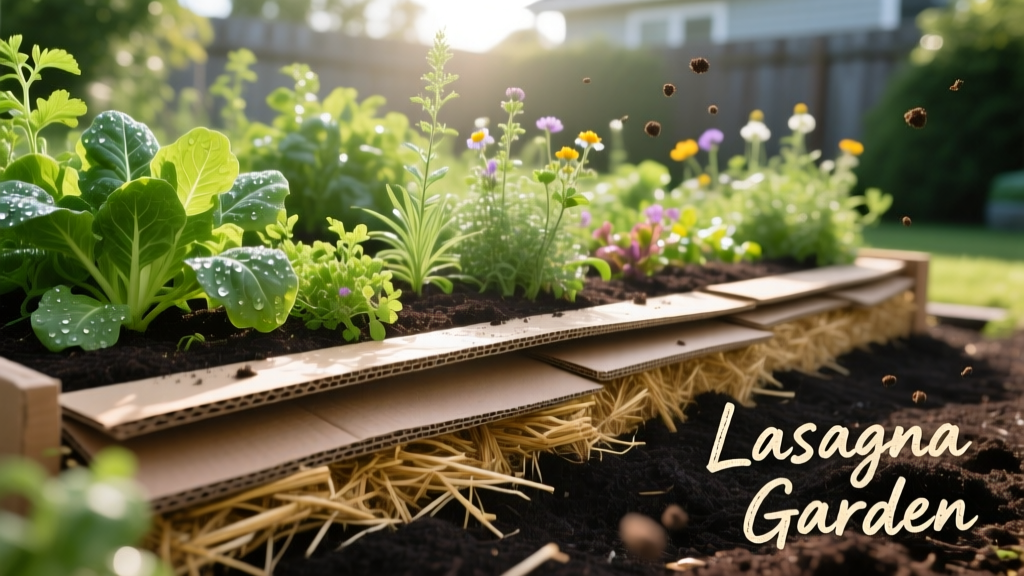
A lasagna garden (also called sheet mulching) builds rich, fertile soil by layering organic materials directly on top of existing ground — no digging, no tilling, no removing grass. Named for its layered structure resembling lasagna noodles, this method converts lawn or weeds into productive garden beds in one season while building soil that rivals decades of composting.
Why No-Dig Works Better Than Tilling
| Factor | Tilling | No-Dig (Lasagna) |
|---|---|---|
| Soil structure | Destroys fungal networks, creates hardpan | Preserves soil food web, improves structure |
| Weed seeds | Brings dormant seeds to surface | Smothered by cardboard layer |
| Earthworms | Kills and displaces worms | Attracts worms upward into new layers |
| Carbon loss | Oxidizes soil carbon into atmosphere | Sequesters carbon in stable humus |
| Labor | Heavy machinery or backbreaking work | Layer materials and wait |
Materials You Need
Brown Layers (Carbon-Rich)
- Cardboard (remove tape and staples) — the base weed barrier
- Dry leaves (shredded is best)
- Straw or hay (seed-free if possible)
- Newspaper (non-glossy, black ink only)
- Pine needles (acidic — good for blueberries and azaleas)
- Sawdust (from untreated wood only)
Green Layers (Nitrogen-Rich)
- Kitchen scraps (no meat, dairy, or oils)
- Fresh grass clippings (thin layers to avoid matting)
- Coffee grounds (free from coffee shops)
- Fresh manure (aged 6+ months or hot-composted)
- Seaweed (rinsed of salt)
- Compost or worm castings
Step-by-Step Construction
Step 1: Mow the Area
Cut existing grass or weeds as short as possible. Leave the clippings in place — they are your first green layer.
Step 2: Lay Cardboard
Cover the entire area with overlapping cardboard (6-inch overlaps). This blocks light and kills grass/weeds within 6-8 weeks. Wet the cardboard thoroughly — it decomposes faster when saturated.
Step 3: Alternate Layers
Build up alternating brown and green layers, each 2-4 inches thick:
- Brown: 4 inches straw or leaves
- Green: 2 inches kitchen scraps or manure
- Brown: 4 inches straw
- Green: 2 inches coffee grounds + compost
- Brown: 4 inches leaves
- Green: 2 inches grass clippings
- Top: 3-4 inches finished compost or topsoil
Step 4: Water Thoroughly
Soak the entire pile with water. Moisture activates decomposition. The pile should be as damp as a wrung-out sponge throughout.
Step 5: Wait (or Plant Immediately)
For best results, build in fall and plant in spring (4-6 months of decomposition). If planting immediately, add a thicker top layer (6 inches) of compost/soil and plant transplants rather than direct-seeded crops.
What to Plant in Year 1
- Best: Transplants with established root systems (tomatoes, peppers, squash)
- Good: Large-seeded crops (beans, peas, sunflowers)
- Avoid: Small seeds (carrots, lettuce) — the surface is too loose and uneven
Timeline
| Time After Building | What Happens |
|---|---|
| Week 1-2 | Pile heats up (120-150F internally), settles 30-40% |
| Month 1-2 | Cardboard decomposes, earthworms move in |
| Month 3-4 | Layers merge into dark, crumbly soil |
| Month 6+ | Rich, plantable soil 8-12 inches deep |
Common Mistakes
- Too much of one material: All leaves = slow decomposition. All grass = smelly, anaerobic mat.
Forgetting to water: Dry layers stop decomposing. Keep moist throughout. - Using treated wood or glossy paper: Chemicals leach into your food garden.
- Insufficient cardboard overlap: Weeds find gaps and push through.
Final Thoughts
Lasagna gardening is the laziest way to build the best soil. One afternoon of layering produces a bed that would take years of composting and tilling to match. Start small — one 4x8 foot bed — and expand each season as you collect more materials.