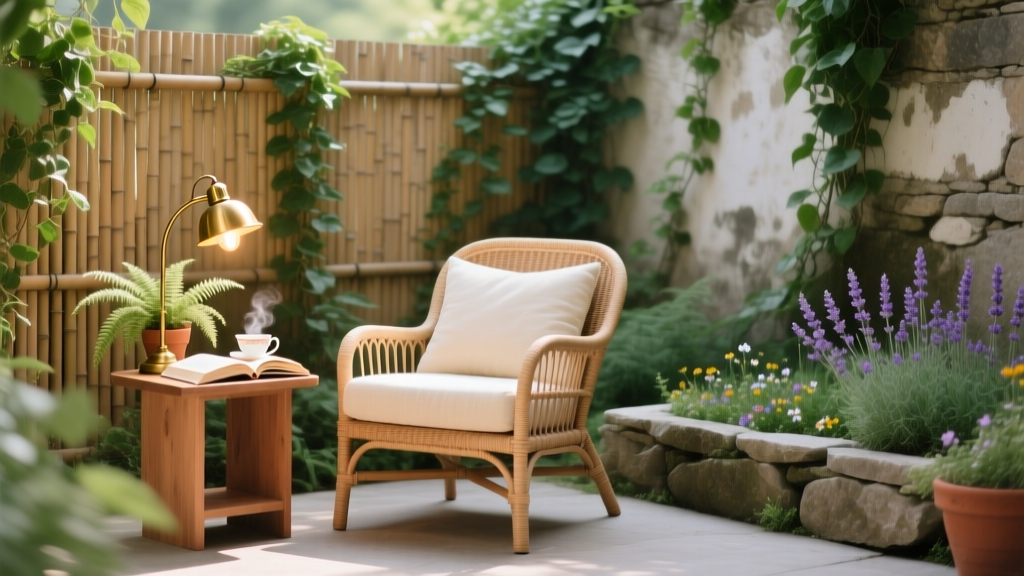
Reading Nook Garden Corner Inspiration
You step outside with a book and a mug of tea, looking for “that spot.” The sun is either blasting the chair, the wind is riffling pages, or the only available corner is wedged between the trash bins and a hose reel. Most gardens and patios have a forgotten edge like this—an awkward triangle of space where nothing quite fits. The good news: a reading nook doesn’t need a sweeping pergola or a designer budget. It needs a deliberate layout, comfortable microclimate, and plants that behave.
Picture a small, sheltered corner where you can sit for 30 minutes without shifting your chair every five. You can hear leaves move, not traffic. The seat is stable, the light is kind, and there’s a place to set your cup. That’s the goal of this project: designing a reading nook garden corner that works in real life, in real spaces—rental balconies, side yards, tiny patios, and suburban borders.
Start with the “microclimate map” (light, wind, privacy)
Before you buy a single plant, spend one day observing the corner you’re claiming. You’re not just measuring square footage—you’re measuring comfort. A reading nook is a human-scale space, and microclimate matters more than in the rest of the garden.
Light: aim for 3–6 hours of gentle sun
For most readers, the sweet spot is 3–6 hours of sun (morning sun preferred) with shade in the hottest part of the afternoon. Full sun can be workable if you add overhead shade, but in many climates it becomes a “too-hot-to-use” zone.
If you’re in the Northern Hemisphere, an east-facing corner is naturally comfortable. A west-facing corner can be harsh; treat it like a heat management project.
Wind: block it at shoulder height
If pages flutter or your hair is constantly in your face, you need a windbreak. You don’t have to build a solid wall—plants and lattice work well because they slow wind instead of creating turbulence. A good target is a wind buffer 36–60 inches tall, placed upwind of your chair.
Privacy: screen the sightlines, not the sky
Privacy feels best when it’s partial: a filtered edge that makes you feel tucked in without turning the space dark. Think: slatted screen + vine, tall grasses, or an airy shrub. If you’re renting, prioritize freestanding solutions like planters, trellises, and folding screens.
“People prefer spaces that offer both prospect and refuge—an opportunity to see without being seen.” — Stephen Kaplan & Rachel Kaplan, environmental psychology research on landscape preference (1989)
Layout strategies that make a corner feel intentional
A reading nook is a simple program: enter, sit, set down drink, read, maybe stretch your legs. Your layout should support these actions in a tight footprint.
Choose one of three corner footprints
Use these dimensions as reliable starting points. They’re small enough for most homes and rentals, but spacious enough to feel comfortable.
- Micro nook (balcony / tiny patio): 3 ft × 5 ft minimum (15 sq ft). Fits one chair + side table + one tall planter.
- Standard corner nook: 6 ft × 6 ft (36 sq ft). Fits lounge chair or small bistro set + layered planting.
- Lux corner nook: 8 ft × 10 ft (80 sq ft). Fits loveseat/bench, side table, and deeper planting for privacy.
Use the “chair-first” placement rule
Put your chair where you actually want to sit, then build everything else around it. A chair placed 18–24 inches away from a wall, fence, or hedge feels calmer than being pressed right against it, and it gives you room for planting and airflow.
Create a simple three-layer planting wall
Even in a narrow corner, you can create depth with a layered planting approach:
- Back layer (privacy): tall, narrow plants or a trellis (4–7 ft tall depending on space).
- Mid layer (softness): shrubs or grasses (2–4 ft tall).
- Front layer (feet zone): low plants (6–18 inches) that won’t snag your chair legs.
Plan the “cup and elbow” surfaces
Reading comfort improves dramatically with one stable surface. Aim for a side table that’s 18–22 inches tall. If you’re building in a corner, a 12-inch-deep wall-mounted shelf (properly anchored) can be enough for a mug and phone.
Materials and hardscape: cozy underfoot, stable seating
Hardscape in a reading nook is about touch and sound. Crunchy gravel can be charming—until it’s stuck in your shoes and scraping on chair legs. Choose what fits your tolerance and your landlord’s rules.
| Surface option | Best for | DIY difficulty | Estimated cost (per sq ft) | Notes for reading comfort |
|---|---|---|---|---|
| Decomposed granite (DG) | Informal patios, drought areas | Medium | $2–$5 | Good drainage; needs edging to stay crisp. |
| Pavers (concrete or clay) | Clean, stable seating | Medium–High | $6–$15 | Best for chair stability; plan for a level base. |
| Deck tiles (interlocking) | Renters, balconies | Low | $5–$12 | Instant transformation; check drainage under tiles. |
| Mulch + stepping stones | Budget corners in gardens | Low | $1–$3 | Soft and quiet; keep stones level for chair legs. |
Practical tip: If you’re placing a chair on DG or mulch, use a 24" × 36" outdoor mat under the front legs so the chair doesn’t “walk” as you shift.
Step-by-step setup (a designer’s order of operations)
Follow this sequence to avoid rework. It keeps the nook functional even if you build it in stages.
- Measure the corner and sketch the footprint. Mark a 36-inch clear path to the seat so you’re not squeezing past pots.
- Place the chair and sit down at the time you’ll use it most (morning, lunch, evening). Notice glare, wind, and views.
- Add shade or screening first: install a freestanding trellis, umbrella, or shade sail anchor points. (Shade changes everything; don’t treat it as an afterthought.)
- Build the floor: level pavers, lay deck tiles, or refresh mulch. Make sure the chair feet don’t wobble.
- Install the “back layer” plants or tall planters to define the nook boundary.
- Add mid and front layers with plants that won’t grab sleeves or shed sticky fruit onto cushions.
- Set lighting (warm, low): solar path light or string lights on a timer for evening reading.
- Finish with comfort details: side table, cushion storage, and a small tray or hook for a lantern.
Plant selection: specific varieties that behave in small reading spaces
Reading nook plants should do at least one job: soften hard edges, create privacy, smell good, attract gentle wildlife, or cool the air. They should also be low-litter, non-thorny (near elbows), and predictable in size.
Back layer (privacy + vertical structure)
1) Clumping bamboo (non-running): Bambusa textilis ‘Gracilis’
Ideal where you want a tall, narrow screen without the chaos of running bamboo. In mild climates it can reach 10–20 ft, but it stays relatively upright. Use it in large planters for renters or where root containment matters.
- Spacing: 3–5 ft apart in ground; 20–24 inch diameter containers for one specimen.
- Why it works: soft sound in wind, excellent privacy, upright habit.
2) Star jasmine: Trachelospermum jasminoides
A classic for trellises and fences. Evergreen in many regions and wonderfully fragrant. Keep it trained flat so it doesn’t swallow the nook.
- Spacing: one plant per 4–6 ft of trellis.
- Sun: best with 4–6 hours sun; tolerates part shade.
3) Arborvitae ‘Emerald Green’ (Thuja occidentalis ‘Smaragd’)
For colder climates where bamboo and jasmine won’t thrive, this is a reliable, narrow evergreen screen.
- Spacing: 2–3 ft apart for a hedge.
- Why it works: tidy, vertical, good winter structure.
Mid layer (soft enclosure + seasonal interest)
4) Hydrangea paniculata ‘Bobo’
A compact hydrangea that doesn’t sprawl like the big mopheads. Great for dappled shade and a calming, cloud-like bloom.
- Spacing: 3 ft apart.
- Why it works: strong structure, showy blooms, manageable size.
5) Miscanthus sinensis ‘Morning Light’
Ornamental grass that gives movement and privacy without a wall effect. Plant away from the chair by about 18 inches so blades don’t tickle your arms.
- Spacing: 3–4 ft apart.
- Why it works: sound, movement, narrow fountain form.
6) Rosemary ‘Tuscan Blue’ (upright rosemary)
Fragrance at arm’s reach, and it tolerates heat. Excellent near seating because it stays fairly clean and woody.
- Spacing: 2–3 ft.
- Sun: prefers 6+ hours sun.
Front layer (feet-friendly, low mess)
7) Creeping thyme: Thymus serpyllum ‘Elfin’
Perfect along stepping stones and the edge of pavers. Fragrant when brushed, low-growing, and doesn’t demand constant trimming.
- Spacing: 8–12 inches apart.
- Why it works: soft edge, pollinator-friendly, drought-tolerant once established.
8) Heuchera (Coral Bells) ‘Caramel’ or ‘Obsidian’
For shade or part shade corners, heucheras offer color without flowers dropping everywhere. Great in containers too.
- Spacing: 12–18 inches.
- Why it works: evergreen-ish in mild climates, tidy mounds.
9) Lavender ‘Hidcote’ (for sunny nooks)
A reading nook classic, but choose compact varieties and plant far enough from paths so you don’t brush blooms constantly.
- Spacing: 18–24 inches.
- Why it works: fragrance, pollinators, silver foliage calming in bright light.
Real-world scenarios: three corners, three solutions
Let’s apply the same design principles to different constraints, the way a designer would adjust a plan on site.
Scenario 1: Rental balcony nook (3 ft × 5 ft, part sun, strict rules)
The challenge: No drilling into walls, limited weight, and neighbors close by.
Layout: Place a compact lounge chair along the long edge, leaving 36 inches to pass. Add a tall planter at the outer corner for privacy and a lightweight folding side table.
Planting plan:
- One 20-inch diameter pot with Bambusa ‘Gracilis’ (or a tall grass like Calamagrostis ‘Karl Foerster’ in colder climates).
- One trellis pot with star jasmine (if allowed) or annual climbers like black-eyed Susan vine for seasonal privacy.
- Two smaller pots of heuchera + trailing thyme along the floor line.
Budget: You can assemble this for about $180–$450 depending on chair choice and planter size. Deck tiles for a 15 sq ft balcony area often land around $75–$180.
Scenario 2: Side yard corner (6 ft × 6 ft, windy, 5–7 hours sun)
The challenge: Wind tunnel between house and fence makes reading annoying.
Layout: Install a 6-ft tall lattice panel on the windward side with one vine, plus two upright shrubs to slow wind. Place the chair diagonally in the corner so your view opens toward the garden rather than into the fence.
Planting plan:
- Back layer: star jasmine on lattice (or climbing rose like ‘Zephirine Drouhin’ if you want fragrance and can handle pruning).
- Mid layer: two rosemary ‘Tuscan Blue’ spaced 30 inches apart for structure and scent.
- Front layer: lavender ‘Hidcote’ and creeping thyme at 12-inch spacing to knit edges.
Cost reality: A simple lattice screen + posts can run $120–$250 in materials. Plants for this footprint often land around $90–$220 depending on pot size.
Scenario 3: Shady backyard corner (8 ft × 10 ft, 2–4 hours sun, damp soil)
The challenge: Shade is lovely for reading, but damp corners can feel cold and look messy.
Layout: Use pavers or deck tiles to create a clean, dry floor. Add a bench with a back (more comfortable for long reading sessions than many chairs). Put a slim console table behind the bench for a lantern and plants.
Planting plan:
- Back layer: arborvitae ‘Emerald Green’ spaced 30 inches apart for year-round structure.
- Mid layer: Hydrangea paniculata ‘Bobo’ (more sun-tolerant than bigleaf hydrangeas) and heucheras for foliage color.
- Front layer: woodland edging plants like Carex oshimensis ‘Evergold’ (ornamental sedge) at 12–18 inch spacing for movement.
Comfort add-on: In damp corners, a small outdoor rug on top of pavers makes the space feel warmer and quieter.
Budget planning and smart DIY swaps
Reading nooks can be deceptively expensive if you buy everything at once. Here’s where to spend and where to simplify.
- Spend on: the seat (comfort matters), a stable surface under it, and one strong privacy element (tall planter, trellis, or shrub).
- Save on: small decor, fancy edging, and rare plant varieties that need special care.
DIY alternatives that look designed:
- Use a stock tank or galvanized trough as a large planter for screening plants (drill drainage holes). Often cheaper than oversized ceramic pots.
- Create a privacy panel with a wood frame + cattle panel (rigid wire) and let vines do the softening.
- Instead of expensive lighting, use a simple warm-white string light set on a timer and run it along the top of the screen.
For a realistic cost range: a well-finished nook with plants, floor surface, and seating typically falls between $250 (DIY, thrifted chair, mulch base) and $1,200 (new seating, pavers, large planters, and mature shrubs).
Maintenance expectations (so it stays a reading nook, not a chore)
Most homeowners want a nook that looks good without becoming a weekly project. If you design with the right plant sizes and spacing, maintenance stays light.
- Weekly time: plan on 20–40 minutes per week in peak growing season (watering, quick deadheading, sweeping the surface).
- Monthly: wipe down seating, check irrigation or watering schedule, train vines back onto their trellis.
- Seasonal tasks:
- Spring: cut back ornamental grasses; refresh mulch; fertilize container plants lightly.
- Summer: deep water early morning; shear lavender after flowering to keep it compact.
- Fall: tidy leaf drop so the seat stays inviting; plant bulbs near the front edge for early color.
- Winter: protect pots in freeze zones (lift off bare ground if possible); prune vines lightly if they snag pathways.
Watering reality: Containers dry out fast. In hot spells, expect to water pots 3–5 times per week unless you add drip irrigation. In-ground plantings can often manage with one deep watering weekly after establishment, depending on climate and soil.
Design details that make it feel finished
A reading nook earns its keep when it feels like a destination, not a spare chair. These finishing choices are small but high-impact.
Control glare with angled shade
If your pages are washed out, shift shade to the west/southwest side. A patio umbrella placed 12–18 inches behind the chair often blocks overhead glare without crowding your knees.
Keep fragrance close, not overwhelming
Place rosemary or lavender within 2–3 ft of the seat so you catch scent as you move, not as a constant blast. For evening reading, jasmine fragrance can be magical—just keep it trained and off the seat back.
Plan one “quiet focal point”
Readers don’t need visual clutter. Choose one focal point: a small birdbath, a sculptural pot, or a single multi-stem shrub. The rest should support calm.
One final designer move: after everything is in place, sit down with your book at the time you’ll use the nook most. Notice what interrupts you—sun in your eyes, nowhere to set a drink, a plant brushing your elbow. Fix those tiny annoyances now. When a garden corner reads as effortless, it’s usually because someone paid attention to those practical details.
Sources: Stephen Kaplan & Rachel Kaplan’s prospect-refuge and landscape preference research is widely summarized in The Experience of Nature (Kaplan & Kaplan, 1989). For container and urban gardening considerations (including soil volume and watering), see Royal Horticultural Society guidance on container growing (RHS, 2023).