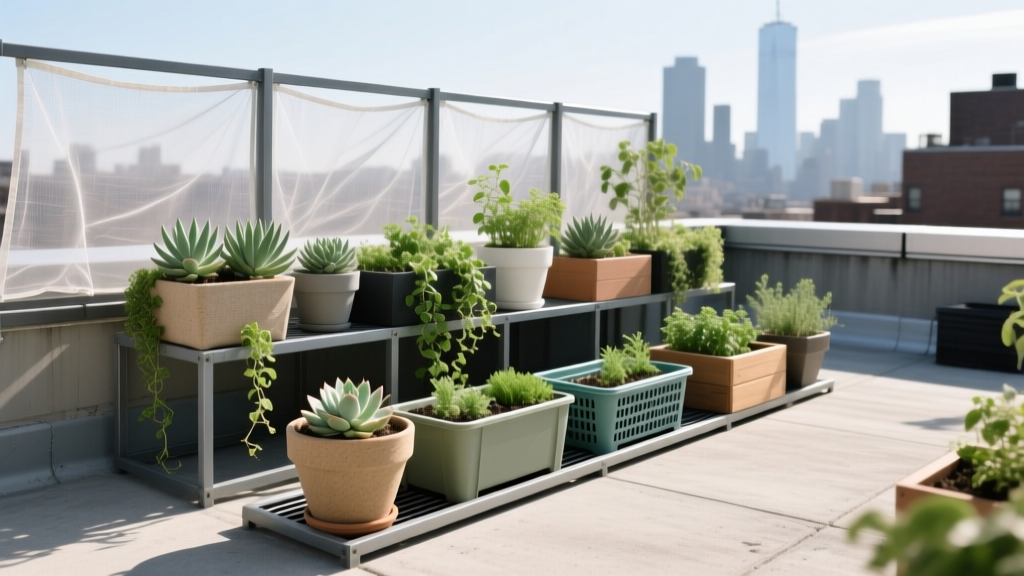
Rooftop Garden Setup: Weight Limits, Container Systems, and Wind Protection Guide
Before You Start: Structural Assessment
The single most important factor in rooftop gardening is weight capacity. A fully saturated 4x8 raised bed with wet soil weighs 2,000-3,000 pounds. Your roof must handle this load plus foot traffic and snow.
Understanding Roof Load Capacity
Most residential roofs are designed for 20 pounds per square foot (psf) live load. Flat commercial roofs may handle 50-100 psf. Here's what common garden elements weigh:
| Element | Weight (per sq ft) |
|---|---|
| 6-inch pot with wet soil | 8-10 lbs |
| 12-inch raised bed, wet soil | 40-50 lbs |
| 24-inch raised bed, wet soil | 80-100 lbs |
| Person standing | 2-3 lbs concentrated |
| Water (1 gallon) | 8.3 lbs |
Lightweight Container Systems
Fabric Grow Bags (Best for Weight-Conscious Gardens)
- Weight when saturated: 15-25 lbs per bag (vs 60+ lbs for same volume in ceramic)
- Excellent drainage, air-pruning roots prevent circling
- Fold flat when not in use
- Cost: $8-15 each, last 3-5 seasons
Foam Planters
- Extremely lightweight (2-5 lbs empty vs 30+ lbs for terra cotta)
- Insulated — protects roots from temperature swings
- UV-resistant varieties last 5+ years
- Cost: $20-40 each
Lightweight Soil Mix
Never use garden soil or topsoil on a roof — it's too heavy and compacts. Use this mix:
- 40% coconut coir (lightweight, water-retentive)
- 30% perlite (drainage, extremely light)
- 20% compost (nutrition)
- 10% worm castings (microbes, micronutrients)
This mix weighs approximately 40% less than standard potting soil when saturated.
Wind Protection Strategies
Rooftops experience 2-3x the wind speed of ground level. Wind dries plants, breaks stems, and topples containers.
Trellis Windbreaks
Install lattice panels or bamboo screens on the windward side. A 50% porous windbreak (not solid) works best — solid barriers create turbulence on the leeward side. Space windbreaks at intervals equal to 5x their height.
Low-Profile Layout
- Place tallest plants in the center, shortest at edges
- Use wide, low containers (wider than tall) for stability
- Secure all containers to the roof structure or to each other
- Choose dwarf or bush varieties over vining types
Irrigation Systems for Rooftops
Rooftops dry out 2-3x faster than ground gardens due to wind and reflected heat.
Drip System (Recommended)
- Timer-controlled drip lines to each container
- Water 2-3 times daily for 5-10 minutes in summer
- Use pressure-compensating emitters for even distribution
- Add inline filters to prevent clogging
Self-Watering Containers
Reservoir-based pots (like EarthBox or Global Growing Systems) hold 3-5 gallons of water that wicks up to roots. They reduce watering frequency to every 3-5 days even in summer heat.
Best Plants for Rooftop Gardens
| Category | Top Picks | Why |
|---|---|---|
| Vegetables | Cherry tomatoes, bush peppers, lettuce, herbs | Compact, productive, wind-tolerant |
| Herbs | Rosemary, thyme, oregano, sage | Drought-tolerant Mediterranean plants thrive in wind |
| Fruits | Dwarf citrus, strawberries, blueberries (bush) | High value, container-friendly |
| Flowers | Sedum, lavender, ornamental grasses | Low water needs, wind-hardy |
Final Thoughts
Rooftop gardens are the ultimate urban food production system — maximum sun, no deer, no ground pests. Start small (10-15 containers), learn the wind patterns, then expand. Always prioritize weight safety over garden ambitions.