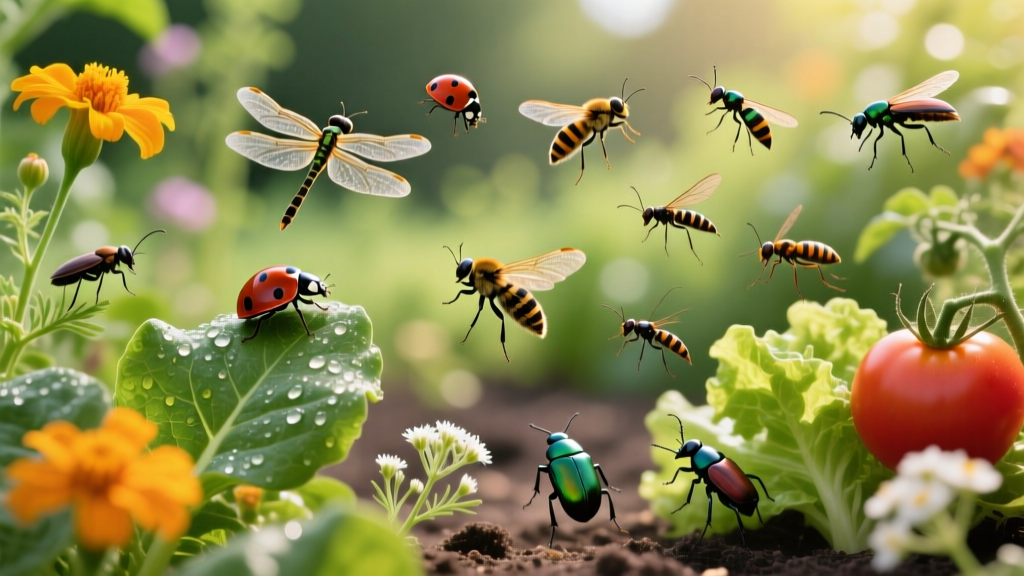
Beneficial Insects Guide: Identify 20 Good Bugs That Protect Your Garden Naturally
Your Garden's Free Pest Control Team
Only 3% of insect species are garden pests. The other 97% are either beneficial or neutral. Yet most gardeners spray indiscriminately, killing the very insects that would protect their plants for free. Learning to identify beneficial insects is the single most impactful skill you can develop for organic gardening.
The Top 20 Beneficial Garden Insects
Predators (Hunt and Eat Pests)
1. Ladybugs (Lady Beetles)
Eats: Aphids (50-60 per day), scale insects, mealybugs, mites
Identification: Red/orange with black spots (adults). Larvae look like tiny black alligators — don't kill them!
Attract with: Dill, fennel, yarrow, cosmos, dandelion
2. Green Lacewings
Eats: Aphids (200+ per week), caterpillars, mealybugs, whiteflies, thrips
Identification: Delicate green wings, golden eyes (adults). Larvae are called "aphid lions" — brown, elongated, aggressive predators.
Attract with: Sweet alyssum, cosmos, sunflowers, dill
3. Praying Mantis
Eats: Any insect it can catch — caterpillars, beetles, flies, even small hummingbirds
Identification: Large, distinctive front legs held in prayer position. Egg cases look like tan foam balls on branches.
Attract with: Tall grasses, shrubs for egg-laying, general garden diversity
4. Ground Beetles
Eats: Slugs, snails, cutworms, cabbage maggots, potato beetles
Identification: Dark, shiny, fast-running beetles found under rocks and mulch at night
Attract with: Permanent ground cover, rocks, logs, mulch — don't disturb their habitat
5. Assassin Bugs
Eats: Caterpillars, beetles, aphids, any soft-bodied insect
Identification: Elongated head, curved beak, often on flowers waiting for prey. Handle carefully — their bite is painful.
Attract with: Diverse plantings, permanent perennials
Parasitoids (Lay Eggs In/On Pests)
6. Parasitic Wasps (Trichogramma, Braconid, Ichneumon)
Eats: Caterpillars, tomato hornworms, aphids, beetle larvae
Identification: Tiny (some smaller than a pinhead), non-stinging to humans. Look for white rice-like cocoons on hornworms — those are parasitic wasp larvae that have killed the pest.
Attract with: Tiny flowers: dill, cilantro, alyssum, thyme flowers, Queen Anne's lace
7. Tachinid Flies
Eats: Caterpillars, squash bugs, Japanese beetles, stink bugs
Identification: Look like large, hairy houseflies. Often seen on flowers.
Attract with: Carrot family flowers, clover, phacelia
Pollinators
8. Native Bees (Mason, Sweat, Bumblebees)
Role: 2-3x more efficient pollinators than honeybees
Attract with: Native wildflowers, bee hotels, bare soil patches, avoid all pesticides
9. Hoverflies (Syrphid Flies)
Eats (larvae): Aphids — one larva eats 400+ aphids in its lifetime
Identification: Yellow-and-black striped, mimicking wasps. Harmless — they can't sting.
Attract with: Alyssum, buckwheat, cilantro flowers, yarrow
10. Butterflies
Role: Pollination + indicator species for garden health
Attract with: Milkweed (monarchs), parsley/dill (swallowtails), native wildflowers
Creating a Beneficial Insect Habitat
The Insectary Border
Dedicate a 3-foot strip along one edge of your garden to beneficial insect plants:
- Tall: Dill, fennel, sunflowers, cosmos
- Medium: Yarrow, goldenrod, echinacea, bee balm
- Short: Alyssum, thyme, clover, alyssum
- Ground level: Leave some bare soil, a log pile, and a shallow water dish with pebbles
Year-Round Bloom Calendar for Beneficials
| Season | Plants in Bloom | Beneficials Supported |
|---|---|---|
| Early spring | Crocus, fruit trees, dandelion | Early bees, hoverflies |
| Late spring | Alyssum, cilantro, dill | Parasitic wasps, lacewings |
| Summer | Cosmos, sunflower, yarrow, echinacea | All beneficials, pollinators |
| Fall | Goldenrod, aster, sedum | Late-season foragers, overwintering prep |
When NOT to Spray
- If you see ladybug larvae (black alligator-looking bugs) on aphid-covered plants — they're handling it
- If a caterpillar has white rice-like cocoons on it — parasitic wasps have already killed it
- If aphid populations are small and not causing visible damage — predators will catch up
- Never spray flowering plants during the day — pollinators are active
Final Thoughts
The goal isn't to eliminate all pests — it's to maintain a balanced ecosystem where pests never reach damaging levels. Plant an insectary border, stop spraying beneficial insects, and within one growing season, nature will do 80% of your pest control for free.