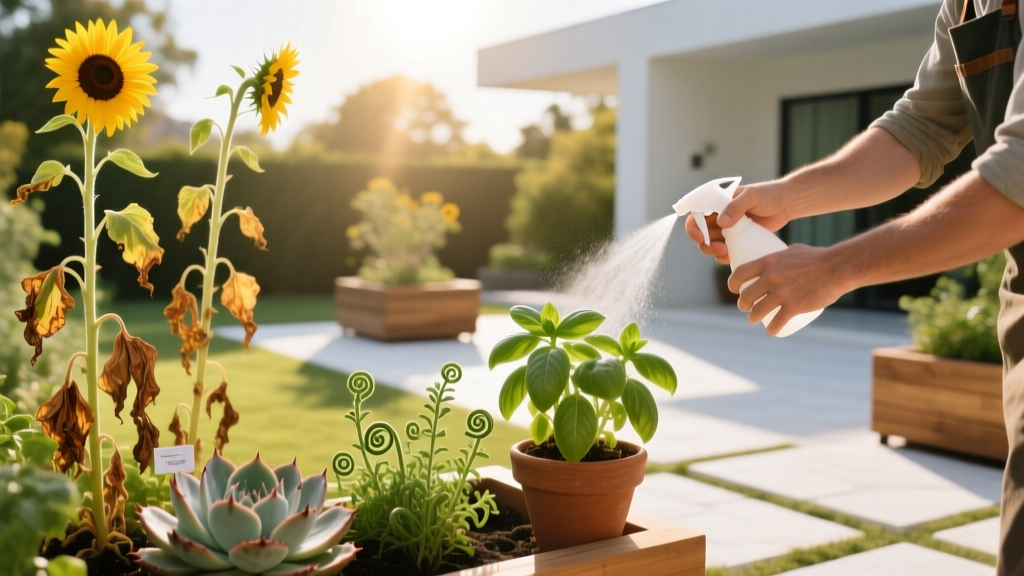
Summer Heat Wave Garden Tips: Save Your Plants
Recognizing Heat Stress in Plants
When temperatures exceed 95°F for multiple days, plants show stress signals: wilting leaves (even when soil is moist), leaf scorch (brown edges), flower and fruit drop, and bolting in cool-season crops. Acting fast can save your entire garden.
Tip 1: Water Deep Before Dawn
Water your garden between 4-6 AM when temperatures are lowest and evaporation is minimal. Deep watering (6-8 inches into soil) encourages roots to grow deeper where soil stays cooler. Avoid overhead watering — wet leaves in hot sun cause fungal diseases and leaf burn.
Tip 2: Double Your Mulch Layer
If you normally use 2 inches of mulch, add another 2 inches before a heat wave. Straw, shredded leaves, or bark chips keep soil temperatures 10-15°F cooler. Focus on vegetable beds and newly planted areas. Keep mulch 2 inches away from plant stems to prevent rot.
Tip 3: Deploy Temporary Shade
Use shade cloth (40-60% density) draped over hoops or stakes during peak heat (11 AM - 4 PM). In a pinch, old bedsheets, lattice panels, or even umbrellas work. Remove shade in the evening so plants get morning dew and air circulation.
Tip 4: Stop Fertilizing Immediately
Do NOT fertilize during a heat wave. Fertilizer stimulates new growth that demands more water and energy than the stressed plant can provide. Wait until temperatures return to normal for at least 5 days before resuming feeding.
Tip 5: Don't Prune or Transplant
Any wound on a plant during extreme heat is an invitation for disease and further water loss. Delay pruning, transplanting, and dividing until the heat wave passes. The only exception: remove clearly dead or diseased foliage.
Tip 6: Harvest Early and Often
Heat accelerates ripening. Check your garden twice daily and harvest fruits and vegetables as soon as they're close to ripe. Overripe fruits on the plant draw energy away from new growth and attract pests. Tomatoes, peppers, cucumbers, and beans benefit most from frequent picking.
Tip 7: Protect Container Plants First
Potted plants heat up 2-3x faster than in-ground plants because roots are surrounded by hot air on all sides. Move containers to shaded areas, group them together (creates a cooler microclimate), and wrap pots in bubble wrap or burlap to insulate roots.
Tip 8: Let Your Lawn Go Dormant
Don't fight to keep your lawn green during a heat wave. Cool-season grasses naturally go dormant in extreme heat. Water only 1/2 inch per week to keep crowns alive. The grass will recover when temperatures drop. Mow higher (3-4 inches) to shade soil and reduce moisture loss.
After the Heat Wave: Recovery Plan
Once temperatures normalize, water deeply, apply a light compost top-dressing, and resume normal care. Don't panic if some plants look damaged — many will recover within 1-2 weeks. Remove truly dead plants and fill gaps with fast-growing heat-tolerant crops like bush beans or zucchini.